
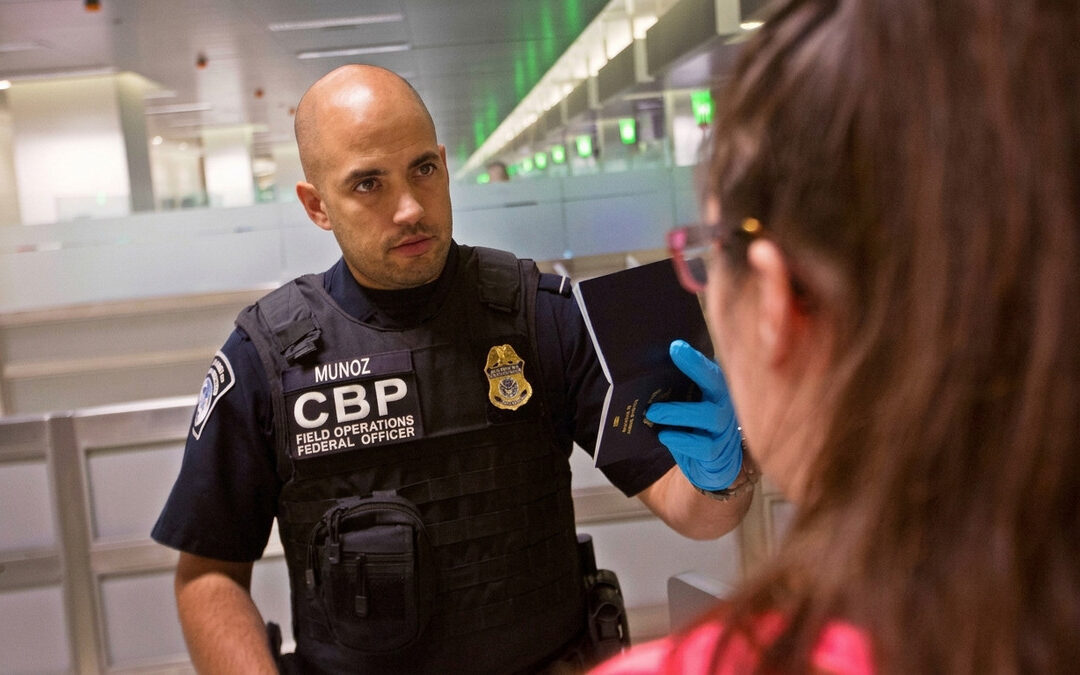
While U.S. lawful permanent residents (LPRs) have significantly more rights than temporary visitors, they are not exempt from the recently increased scrutiny by the U.S. Customs and Border Protection (CBP). Currently, the most common policy CBP officers are cracking down on is the 180-day threshold for residents regarding continuous stays outside the country.
However, certain U.S. border encounters have raised concerns about the heightened enforcement, such as a CBP officer threatening to take a Canadian’s green card for “robbing” the American dream from others. A more recent incident reignited these fears after a border agent told a Miami International Airport (MIA) passenger they were at “risk” of violating residency rules despite observing the 180-day limit.
CBP Warns Frequent Traveler Of Residency Violation At MIA

Last week, a green card holder said a CBP officer gave them a “verbal warning” at MIA during a secondary inspection after a short flight from a “near-abroad country” where they own a home. According to the traveler, they frequently go back and forth to the nation to visit their terminally ill father, about once or twice over the past six months for three to five days.
Since they were fully aware of the 180-day limit, they were surprised when the border officer vaguely told them to review their residency documents, as they were supposedly at risk of breaching its terms.
“Got sent to secondary today after a long line of questioning at primary inspection,” the MIA passenger recalled on Reddit. “Officer at secondary was quite stern and told me this is a ‘verbal warning’ that I am at risk of violating residency terms. Then I got sent to bag inspection and that officer asked the same questions and said he sees no concern unless I’ve been away for long periods consecutively. No annotation in the passport. Wasn’t asked to sign anything.”
The U.S. resident, who was eventually let go after the interview, asked Reddit’s r/greencard community if they should be worried about possibly breaking a whole different rule, since the CBP officer acknowledged that they did not have any issues with overstaying abroad. Green card holders expressed mixed opinions, with some pointing to “odd travel patterns.”
While many assured the MIA passenger that the CBP officer was probably just having a “bad day” and they should ignore the warning, others sided with the agency for flagging them over their travel pattern, as it “suggests smuggling activity.”
They then urged the traveler to make sure they don’t pack anything that may be considered contraband and be prepared for another secondary inspection next time. Commenters also emphasized that innocent routine trips that might have been “normal” before may now raise questions at the border under the current administration.
CBP Travel Rules For U.S. Lawful Permanent Residents

A CBP spokesperson told TheTravel in a previous report that an officer may assert that a green card holder has abandoned their residency status if they have been absent from the U.S. for an extended period, beyond allowable thresholds. CBP guidelines state that under 8 U.S.C. § 1101(a)(13)(C), specifically section 101(a)(13)(C) of the Immigration and Nationality Act, those exceeding standard limits will be treated as an “applicant for admission” by CBP officers.
That means placing them in the same category as tourists, foreign students, or first-time visa holders. Beyond these timelines, officers routinely send individuals to cross-check travel histories and domestic ties. In the MIA passenger’s case, it is possible that the border agent just wanted to check similar details, especially as they own a home in their out-of-country destination and work remotely.
As the other U.S. residents advised the Redditor, they should start preparing proof of their compliance, as they may be subjected to another secondary check next time. A CBP spokesperson previously shared some tips with TheTravel on how green card holders can ensure smoother border processing:
|
Maintain Valid Documentation |
Always carry a valid, unexpired Permanent Resident Card (Form I-551) when traveling internationally. |
|
Limit Absences |
Extended absences from the United States may lead to questions regarding whether they have maintained their residence. Absences of more than one year may require additional documentation, such as a reentry permit (USCIS Form I-131). |
|
Be Prepared for Inspection |
Upon arrival at a port of entry, all aliens, including LPRs, are subject to inspection by a CBP officer. LPRs should be prepared to answer questions regarding their travel, their ties to the U.S., and their intent to maintain permanent residence. |
|
Keep Records Updated |
Ensure that all contact information and residential addresses are current with USCIS. |
|
Understand Your Status |
Know the responsibilities of maintaining LPR status, including the requirement to comply with all U.S. laws (e.g., CBP can detain or challenge your reentry over pending criminal charges or convictions). |
TheTravel reached out to CBP for more information on the matter. However, according to official protocols, if a border officer concludes the traveler has abandoned their residency or questions their inadmissibility due to prolonged absences, officers may get them to sign a voluntary relinquishment of their status.
Individuals have the right to refuse this. However, the high-pressure environment at the border creates widespread confusion about CBP officers’ authority during these situations.
Can CBP Revoke Your Green Card?

While CBP officers may confiscate your physical plastic green card at a U.S. port of entry due to violation of residency rules, they cannot automatically or unilaterally revoke anyone’s LPR status. Only an immigration judge has the legal power to formally terminate one’s permanent U.S. residency.
This means if a CBP officer introduces the Form I-407 (Record of Abandonment of Lawful Permanent Resident Status) to a green card holder during a secondary inspection, they may legally insist on seeing an immigration judge rather than surrendering their status on the spot.

In that case, an agent should issue a Form I-1862 (Notice to Appear) in removal proceedings. The individual defending their residency must then present evidence of their ongoing ties to the U.S., such as tax returns, property ownership, employment, or family obligations.
Because Lawful Permanent Residents (LPRs) possess constitutional due process rights, CBP cannot simply deport them at the port of entry over suspicions of status abandonment. They are still generally allowed to physically enter the U.S. while their case is sorted out, unlike non-residents who may simply be denied entry or issued long-term bans over frequent U.S. visits.

Recent Comments