
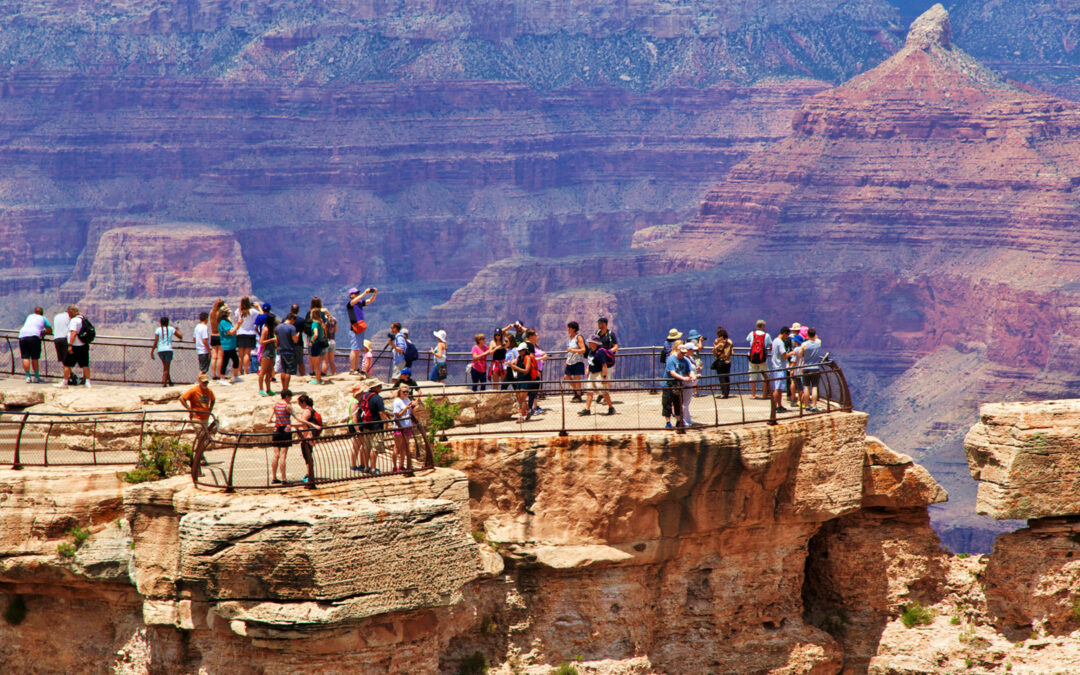
Grand Canyon National Park just announced that it is implementing water conservation measures following a break in the Transcanyon Waterline (TCWL), which provides drinking water and fire safety for park facilities. The restrictions require both visitors and park residents to cut back on water use, with some adjustments that may be uncomfortable for some.
This comes after the park advised hikers to stay away for six hours following a surge in deaths caused by extreme summer heat, as well as other threats to the Grand Canyon’s water resources. Here’s how tourists should plan their trip when visiting Grand Canyon National Park while crews work to restore essential water services.
Grand Canyon National Park’s New Water Restrictions For Visitors After Waterline Break

On Wednesday, Grand Canyon National Park imposed water conservation measures on the South Rim due to a break in the Transcanyon Waterline. The most recent pipeline break occurred about one mile below Cottonwood Campground along the North Kaibab Trail, which has prevented water from being pumped to the South Rim—the park’s most popular spot.
Both park visitors and residents are required to conserve and reduce water consumption by:
- Reducing toilet flushing
- Waiting for full loads or switching to eco-mode before running dishwashers and washing machines
- Taking quick showers and turning off sinks while brushing teeth or shaving
- Reporting and repairing drips, leaks, and other sources of water loss
- Using only reclaimed water for washing vehicles
The park warns that potable water is also currently unavailable in the Manzanita Rest Area, Cottonwood Campground, Bright Angel Campground, Delta Restrooms, and Boat Beach.
Backcountry hikers headed to the Phantom Ranch area or the North Kaibab Trail corridor are urged to carry enough water and have the ability to filter and treat water. The national park’s Water Utility Crews are actively working on repairs to restore water services as soon as possible. A TCWL break usually takes three to five days to repair, but water conservation measures may last longer in case of multiple or back-to-back breaks.
What Is The Transcanyon Waterline?
The 12.5-mile Transcanyon Waterline serves as the primary potable water supply for millions of visitors and 2,500 year-round residents on the South Rim of the Grand Canyon, as well as some inner canyon facilities in the Cross Canyon Corridor including more than 800 historic buildings.
The TCWL pumps and treats water from Roaring Springs on the North Rim. However, it is notoriously prone to breaks—suffering over 85 major breaks since 2010—due to a combination of material, old age (built in the 1960s), harsh canyon environment, and extreme water pressure.
Grand Canyon’s Transcanyon Waterline Is Undergoing A $208 Million Rehabilitation

The National Park Service (NPS) is currently replacing the TCWL in a $208 million multi-year rehabilitation project, mainly because it has been operating well beyond its intended 30-year design life. Frequent breaks, which always disrupt water delivery, also cost a lot to fix.
Repairs for every waterline break exceed $25,000, as access to the inner canyon where damage occurs is only by trail and helicopter. The new water system is expected to meet all water service needs in the South Rim and inner canyon for 50-plus years.
Current Status Of The TCWL Project

The TCWL replacement and rehabilitation project officially began when the contract was awarded in March 2023. The NPS projects its overall completion for 2027. With more construction underway, Grand Canyon visitors are informed about future closures starting Oct. 15, 2026:
- North Kaibab Trail from the Redwall Bridge (approximately 2.5 miles north of Manzanita Rest Area) to the northern end of Cottonwood Campground.
This means that traditional “Rim-to-Rim” hiking (North Rim to South Rim or South Rim to North Rim) will not be possible starting Oct. 15. Visitors are advised to check Grand Canyon National Park’s official Operations Update page for work status and closures.
Aside from its decades-long TCWL problem, Grand Canyon National Park is also dealing with other water-related issues, from low water levels to proposed data centers. The former is due to the recent record snow drought and lower flows down the Colorado River through the Grand Canyon. Sinjin Eberle, senior director of regional communications at American Rivers, said this could affect the park’s nearly $50 million-a-year boating industry.
“Those commercial operations that can make a full Grand Canyon trip in eight or nine days, those will be less possible if the river is so low,” Eberle told KTAR News 92.3 FM earlier this week.
As for the latter, the Bureau of Land Management (BLM) recently approved the construction of a data center on federal lands in Southern Nevada, which would extract huge amounts of water from the same Colorado River Basin. This follows the White House Executive Order 14318, signed in July 2025, which orders the utilization of “federally owned land and resources for the expeditious and orderly development of data centers.”

The Sierra Club and The Center for Biological Diversity have filed an official appeal to block the proposal. These data centers not only pose threats to Grand Canyon National Park’s river tourism and scenic views, but also to its fire suppression operations.
Last summer, the Dragon Bravon Fire, which started from a lightning strike on the North Rim of the Grand Canyon, burned nearly 150,000 acres, including historic structures. The Department of the Interior Secretary Doug Burgum later drew flak for blaming the massive spread of the fire on already struggling NPS employees.

Recent Comments