
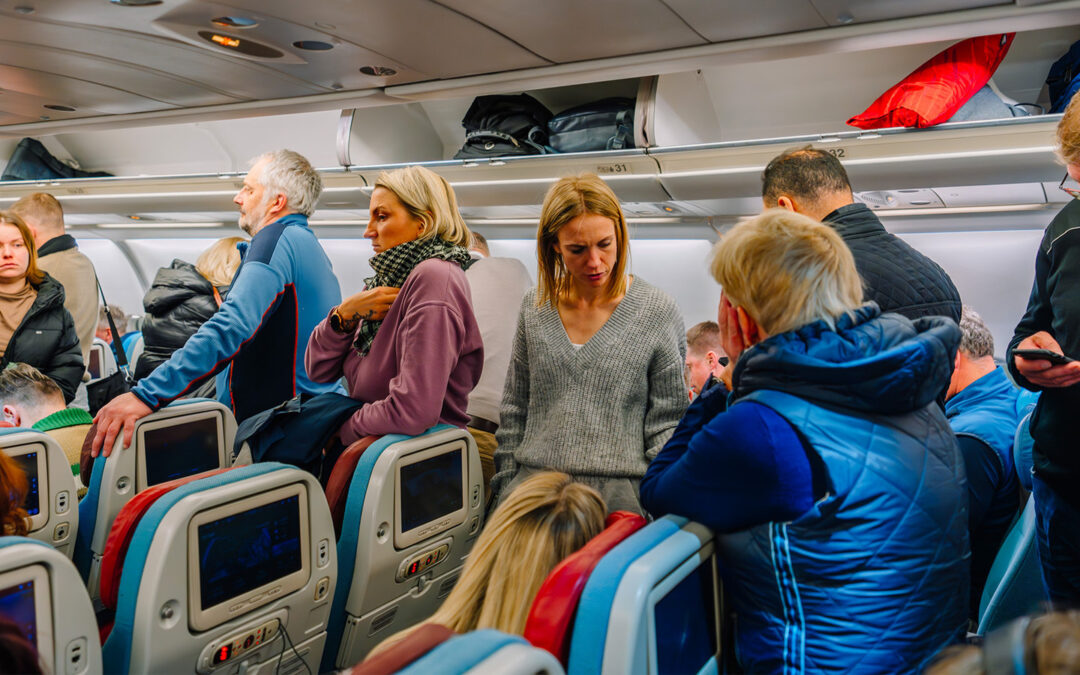
Passengers were ready to deboard a KLM flight in Houston when a flight attendant reportedly told everyone to sit back down — because officers from U.S. Customs and Border Protection (CBP) were about to board, according to a passenger on the flight.
The passenger described the encounter on Reddit and later told TheTravel it happened on KLM flight 661 from Amsterdam to Houston on October 11, which arrived in Texas around 1:30 p.m. They said, “a flight attendant announced that everyone should stay seated while officers from CBP boarded.” Soon after, two passengers’ names were announced. A few minutes later, two passengers were seen walking down the aisle to leave the aircraft. The traveler guessed that there were visa issues, but did not report hearing an explanation.
Why they were approached — and what happened after they left — remains unclear. KLM told TheTravel it had checked internally but could not find a record of an incident involving CBP on that flight. TheTravel has also reached out to CBP to confirm details of the incident. The account raises a question for international travelers: Why might border officers ask for specific passengers before everyone else leaves the plane?
CBP Knows Exactly Who Is On An International Flight Before It Lands

CBP does not have to wait until travelers reach passport control to know who is on an arriving flight. Commercial airlines must send passenger information electronically to CBP before departing from an international airport to the U.S., according to a notice posted by the agency on the Federal Register. They must also send over that same customer manifest for all international flights leaving the country.
The system is called the Advance Passenger Information System, or APIS. The information shared includes a passenger’s full name, date of birth, nationality, and passport details. It gives authorities a chance to check travelers before they arrive. That explains how officers might know which names to ask for when a flight arrives.
Why Might CBP Select a Traveler for Additional Screening?

According to the agency, an outstanding arrest warrant is one reason CBP may identify a traveler before they even get to passport control; the agency is known to receive alerts about warrants involving any inbound passengers.
“In some cases, CBP officers may meet travelers on an arriving aircraft or jet bridge as part of routine operational coordination and passenger processing,” a spokesperson for the agency told TheTravel. “This is part of CBP’s broader processing and enforcement operations. Decisions about how and where to process travelers are based on operational, logistical, and administrative considerations.”
Officers also use shared law-enforcement records to identify travelers for further checks upon arrival. Those records can include wanted persons, criminal histories, and previous border inspections. According to the agency, additional checks could be based on all that collected data — but depend on an officer’s personal judgment or just random selection.
These procedures explain why an arriving traveler might face more questions or checks, and that being singled out therefore does not, by itself, establish any wrongdoing.
Airlines Are Increasingly Getting Involved in Airport Immigration Enforcement

Other airport encounters have raised questions about how airlines respond when immigration officers seek access to passengers. For instance, in a recently filed lawsuit against United Airlines, passenger Patience Gore alleges airline employees made up an issue about her boarding pass and lured her to her flight’s gate counter.
She never boarded her flight from Phoenix back to Washington, D.C. — because as she approached the gate, she was detained by three plainclothes ICE agents. They took her into custody, where she was held for 11 days.
Her husband said agents eventually showed what appeared to be an administrative immigration warrant — a document issued through immigration authorities rather than signed by a judge — and referred to an existing order to remove her from the country.

Gore had previously received protection against being sent back to Zimbabwe, and her court filings say she held permission to work in the U.S. and complied with required ICE check-ins.
In a separate incident in Dallas, Southwest employees reportedly refused to let an ICE officer board a flight to arrest a traveler. They also reportedly declined to share passenger information or let the officer view their computer screens.
In a statement to TheTravel, the airline said its longstanding policies require appropriate legal documentation before customer information can be shared with law enforcement.
How To Avoid This Happening To You

There is no guaranteed way to avoid additional screening. U.S. citizens and foreign travelers alike are subject to CBP inspection, and some travelers are selected at random.
Before flying, check the passport and entry requirements that apply to your nationality and purpose of travel. International visitors should confirm that they have the appropriate visa or, if traveling under the Visa Waiver Program, an approved ESTA — the online travel authorization used by eligible visitors.
Make sure your application information is accurate: CBP says mistakes in passport or personal details on an ESTA application require a new application. And if you’re issued a new passport, you’ll also need a new ESTA authorization, according to the agency.
“Travelers can help avoid delays by ensuring their passport and travel documents are valid and that the information provided to their airline matches those documents,” a CBP spokesperson told TheTravel. “Travelers should also review U.S. requirements for prohibited or restricted items, agricultural products, currency reporting, and duty-free exemptions. More information is available through CBP’s ‘Know Before You Go‘ guidance.”
Having the right documents is essential, but a visa or approved ESTA does not guarantee entry into the U.S. At the end of the day, CBP can decide whether to allow entry or not.

Recent Comments