
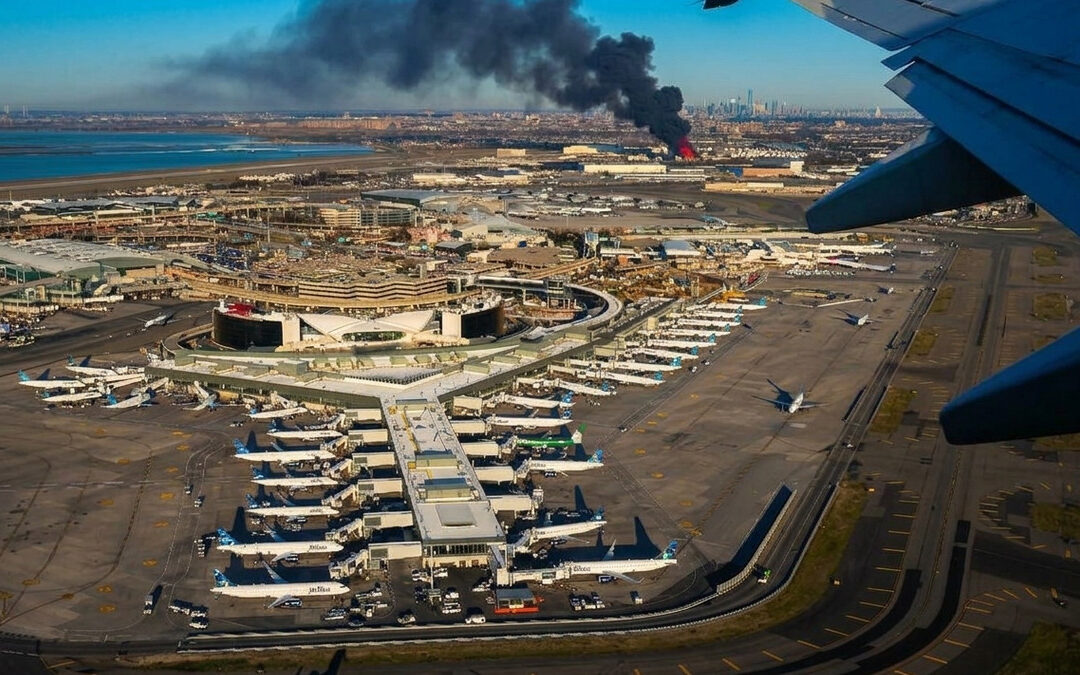
Flames and a towering plume of smoke at New York’s John F. Kennedy International Airport (JFK) might be the last things passengers want to see before takeoff. Footage shared by The Lakewood Scoop captured just that on the afternoon of October 13.
While the scene may certainly look alarming from an airplane window, the airport has a perfectly normal explanation, citing that there’s “no cause for alarm.”
JFK Airport Fire Seen From Runway
Passengers spotting a burning fire with large plumes of smoke may indeed appear alarming. However, it’s business as usual for airport firefighters and rescue workers; it was part of a training exercise, which JFK confirmed publicly in advance of the event.
“A live fire training exercise is being conducted, in which fire and smoke will be produced in a controlled fashion, away from public areas. There is no cause for alarm and there will be no impact to flight operations,” JFK said in a notice posted on social media.
Exercises like these give fire department personnel a chance to respond to an actual emergency, and under federal airport safety rules, they must be completed on a routine basis.
Despite the visible flames and smoke, JFK said the exercise would take place in a controlled setting away from public areas and that it should not affect flight operations.
JFK is one of the country’s busiest international gateways — and handles the highest volume of passengers in New York City. Based on the airport’s notice, passengers weren’t being asked to change their travel plans. TheTravel has contacted the Port Authority to confirm the exercise’s timing and duration and whether any delays or runway restrictions occurred.
Why Do Airports Conduct Live-Fire Training?

Airport firefighters train to respond to aircraft emergencies, from extinguishing fires to helping passengers evacuate — for when the real thing happens.
Just this summer, for example, JFK’s emergency crew responded to an aircraft incident involving a Delta flight. The airplane aborted its takeoff after the crew received an indication of an engine issue. Emergency vehicles responded, and passengers later deplaned normally once the aircraft was towed back to the gate.
The fire-drill requirements are set by the Federal Aviation Administration (FAA); the rules require rescue and firefighting personnel to participate in at least one live drill before beginning their duties and every 12 consecutive calendar months afterward.
In a video about its aircraft rescue and firefighting unit, known as ARFF, the Port Authority explains that JFK uses propane gas to fuel its training fires. Crews practice putting out real flames in a controlled setting, preparing for the conditions they might face during an aircraft emergency.
According to the video, its firefighters take part in this training twice a year. Even when training is underway, airports must keep enough trained rescue and firefighting personnel available to respond to a real emergency while flights are operating.
Live-Fire Training Happens At Other Airports, Too

JFK isn’t alone in these exercises. In May, Harry Reid International Airport in Las Vegas posted about firefighters practicing with a mock aircraft set ablaze using propane.
“This is our daily job we would do if there were an emergency,” Assistant Fire Chief Scott Carnahan said in the airport’s post.
Over in Texas, Dallas Fort Worth International Airport houses a dedicated Fire Training Research Center that trains emergency responders from around the world. DFW describes aircraft rescue and firefighting as a specialty encompassing emergency response, hazard mitigation, evacuation, rescue, and emergency medical care for passengers and crew during airport ground emergencies.

Recent Comments