
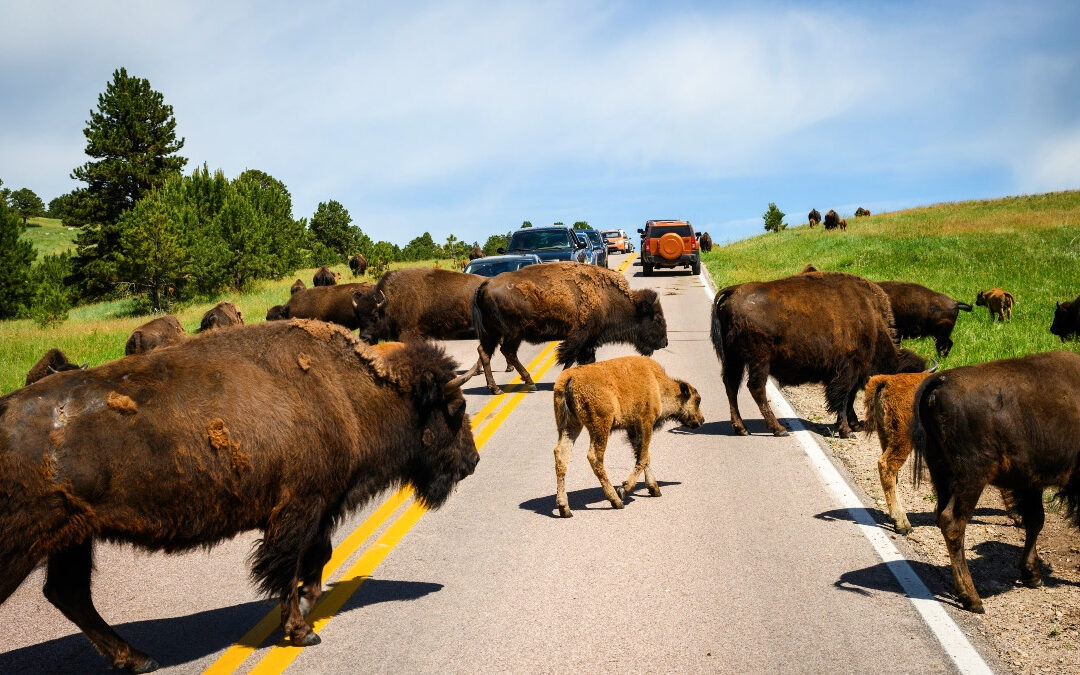
Imagine driving through golden prairie grass as the sun dips behind the granite peaks of the Black Hills. You aren’t fighting for a parking spot or checking a QR code on your dashboard to prove you have a reservation. Instead, you are slowly rolling along a paved road as a massive wall of dark fur crosses just feet from your bumper. This isn’t the crowded Lamar Valley of Yellowstone; it is the 18-mile Wildlife Loop in South Dakota‘s Custer State Park.
While Yellowstone National Park remains the iconic choice for megafauna, the logistical hurdles of 2026 have made it a challenge for the spontaneous traveler. Between timed-entry systems and the sheer density of the crowds, the experience often feels more like a theme park than a wilderness adventure. South Dakota’s Custer State Park offers a refreshing alternative that delivers the same heavy-hitting wildlife without the red tape.
The park spans roughly 71,000 acres of protected land, ranging from rolling grasslands to dense pine forests and jagged rock formations. It is home to one of the largest publicly owned bison herds in the world, with numbers that rival the sightings found in much larger national parks. For those looking to maximize their time in the Black Hills, this state park is the centerpiece of a high-value itinerary.
This guide explores why Custer is the ultimate wildlife dupe in 2026 and how to navigate its famous 18-mile loop. From the proximity to national monuments to the flat fees for vehicles, it is clear why savvy travelers are shifting their sights to the Dakotas. Prepare for an encounter with 1,500 bison that requires nothing more than a simple walk-up entry fee and a bit of patience.
The Accessibility of Custer State Park

Custer State Park sits in the heart of the Black Hills, a region known for its dramatic landscapes and deep historical roots. Unlike the massive national parks that require months of planning, this state-run gem operates with a level of simplicity that is becoming rare in 2026. Travelers can simply drive up to the gate, pay their fee, and begin their adventure immediately.
The financial aspect is just as appealing as the logistics. According to travelonthereg.com, the park typically charges a $20 to $25 vehicle fee, which grants access for up to seven days. This is a significant value compared to the rising costs and friction associated with the America the Beautiful pass or individual national park entry fees that often require digital pre-authorization.
The park itself is massive, covering enough ground to keep visitors occupied for multiple days. As Travel & Leisure reported, the 71,000 acres comprising Custer State Park offer a variety of ecosystems that support a diverse range of animals. You can find everything from high-altitude granite spires at Sylvan Lake to the sweeping plains that the bison call home.
Because there is no reservation portal to navigate, the park maintains a sense of wilderness that is often lost in more famous destinations. You won’t find the two-hour entry lines that plagued Yellowstone in 2026. Instead, the flow of traffic is manageable, allowing for a more intimate connection with the environment. It is the perfect anchor for any South Dakota road trip.
This ease of access sets the stage for the park’s crown jewel: the Wildlife Loop Road. While the entire park is beautiful, this specific stretch of pavement is where the magic happens for animal lovers. It is a place where the bison aren’t just a distant speck on a hill, but a constant presence that dictates the pace of your day.
Navigating the 18-Mile Wildlife Loop Road

The Wildlife Loop Road is the primary reason travelers flock to this corner of South Dakota. Stretching for 18 miles through the southern portion of the park, this route is designed to showcase the best of the local fauna. It winds through open prairies and red-walled canyons, providing ample opportunities to spot animals in their natural habitat.
Timing is everything when it comes to wildlife viewing, but the density of animals here makes success almost guaranteed. As yahoo.com detailed, the drive takes roughly 45 minutes to two hours depending on how often you stop for wildlife. During the early morning or late evening hours, the road often becomes a bustling corridor of activity.
The stars of the show are undoubtedly the bison. While other parks might boast larger total numbers, the concentration of the herd here is staggering. As unearththevoyage.com noted, the park manages an estimated 1,300 to 1,500 bison that roam freely across the plains. Seeing hundreds of these massive creatures together is an experience that rivals the famous Lamar Valley.
Beyond the bison, the loop is home to a variety of other species that are equally fascinating. You can expect to see pronghorn antelope darting through the grass, bighorn sheep perched on rocky outcrops, and elusive elk near the forested edges. One of the most charming encounters involves the “begging burros,” a group of friendly donkeys that often approach cars looking for a snack.
The experience of driving the loop is far more relaxed than the frantic “bison jams” found in national parks. While traffic does stop when the herd crosses the road, the atmosphere is generally respectful and quiet. This allows you to truly appreciate the scale and power of the animals. This density of sightings makes Custer a premier destination for wildlife tourism South Dakota.
A Compact Black Hills Road Trip Itinerary

One of the most significant advantages of choosing Custer over Yellowstone is the compact nature of the region. In a national park, you might spend four hours just driving between two major sights. In the Black Hills, everything is interconnected, allowing you to see world-class monuments and pristine wilderness all in a single afternoon.
Custer State Park serves as the perfect base camp for what locals call the Triple Threat itinerary. As visitsaltlake.com confirmed, the park is within a proximity to Mount Rushmore and Crazy Horse Memorial that ranges from just 15 to 45 minutes. You can watch the sunrise with the bison and be standing beneath the granite faces of the presidents by brunch.
This proximity makes it an ideal destination for families or travelers with limited time. You don’t need a two-week window to experience the highlights of the region. A three-day stay in the Black Hills travel area can easily include a full drive of the Wildlife Loop, a hike up Black Elk Peak, and visits to both major carvings.
The surrounding towns like Custer and Hill City offer plenty of amenities without the inflated prices often found in national park gateway communities. You can find local breweries, historic hotels, and small museums that tell the story of the Wild West. The entire area feels like a cohesive travel experience rather than a series of isolated tourist traps.
The efficiency of this itinerary is a major selling point in 2026. As travel costs rise, the ability to see multiple iconic American landmarks without spending hundreds on fuel or fighting for limited lodging is a clear win. It turns a simple park visit into a comprehensive cultural and natural tour that is hard to beat anywhere else in the country.
Why State Parks Are the New Wildlife Tourism Leaders

As we move through the 2026 travel season, it is becoming clear that state parks are no longer just the “backup plan.” For many, they have become the primary choice because they offer a higher quality of experience with significantly less stress. Custer State Park is the poster child for this shift, proving that you don’t need a national designation to provide world-class wildlife encounters.
The “wildlife dupe” trend is real, and it is driven by a desire for authenticity. When you are on the vast bison plains of Custer, you aren’t surrounded by thousands of people holding up tablets to take photos. You are often alone with the wind and the sound of the herd. This sense of solitude is what many travelers are actually seeking when they head west.
The management of these parks also tends to be more flexible. State parks can often adapt to visitor needs more quickly than the federal system, which is bogged down by massive bureaucracies. This results in better-maintained roads, clearer signage, and a more welcoming atmosphere for the average visitor. Custer remains one of the best state parks in the U.S. for this very reason.
|
Feature |
Custer State Park |
Yellowstone National Park |
|---|---|---|
|
Bison Population |
1,300 to 1,500 |
5,000+ |
|
Reservation Required? |
No |
Yes (Timed Entry) |
|
Vehicle Entry Fee |
$20 to $25 |
$35+ |
|
Proximity to Monuments |
15 to 45 Minutes |
4 to 6 Hours |
Ultimately, the choice between a national park and a state park comes down to what you value most. If you want the name recognition and the specific geothermal features of Yellowstone, then the reservation hassle might be worth it. However, if your goal is to see massive herds of bison and enjoy a classic American road trip without the headache, South Dakota is the clear winner.
Custer State Park has spent years quietly building one of the best wildlife experiences in North America. In 2026, the secret is out, but the park remains as accessible and beautiful as ever. Whether you are a solo photographer or a family on a summer vacation, the 18-mile Wildlife Loop delivers exactly what it promises: a wild, unfiltered look at the heart of the American West.

Recent Comments