
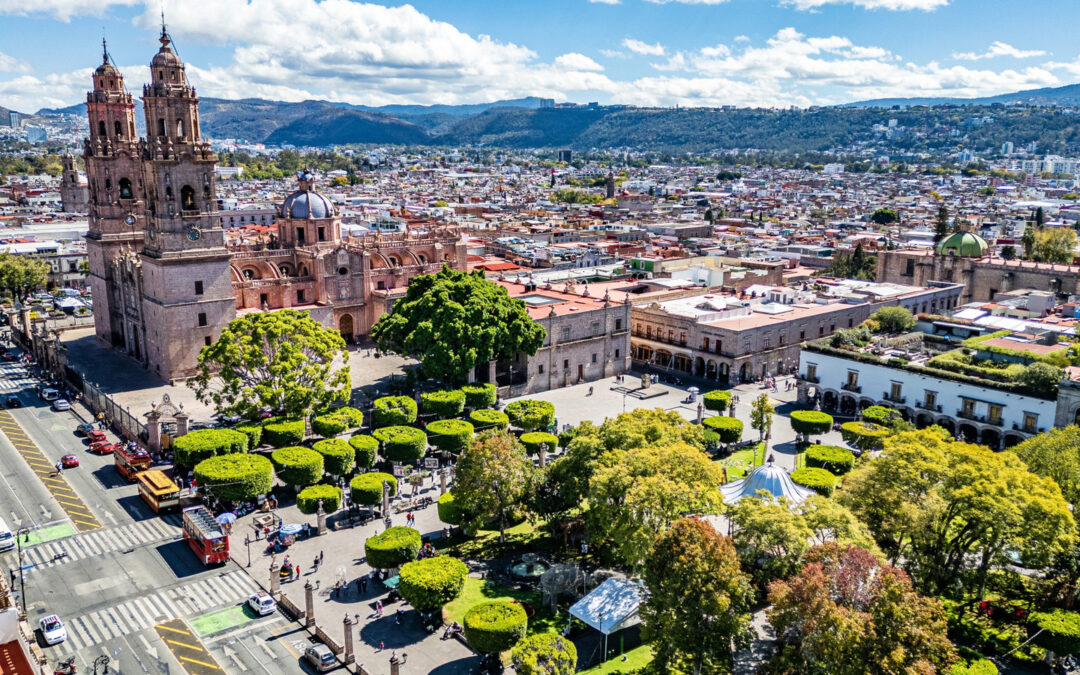
The U.S. Department of State has been actively updating its travel advisories for popular destinations, highlighting on-the-ground security risks, ranging from violent crimes in a famous cruise port of call to crimes targeting foreigners in a European vacation spot. Most recently, the U.S. government reiterated its “Do Not Travel” warning for a vibrant region in Mexico, known as the country’s “soul.”
The U.S. Embassy has issued an alert about a “threat against American interests” in this Mexican state. Still, this area welcomed a record-breaking number of tourists last year despite having a Level 4 advisory for several years now. Here is a closer look at the safety conditions in this forbidden Mexican destination.
U.S. Heightens ‘Do Not Travel’ Advisory For Michoacán, Mexico In New Security Alerts

On Wednesday, Aug. 5, the U.S. Embassy in Mexico issued a security alert about the suspension of U.S. government activities in Michoacán State due to “a threat against American interests.” The announcement reiterates that the Mexican state is also under the U.S. State Department’s Level 4: “Do Not Travel” advisory due to terrorism, as well as widespread crime and violence from cartels, gangs, criminal organizations, and terrorist groups.
On Friday, however, the U.S. Embassy announced that “with the cooperation and assistance of the Government of Mexico, the U.S. government will on August 8 resume activities in Michoacan in the areas of Tancitaro, Tacambaro, Uruapan, and the area between Morelia and Patzcuaro.”
It is still unclear when operations will fully restart. This comes nearly a week after the U.S. Embassy warned that local security forces in Michoacán had been put on alert due to safety threats, with reports of roadblocks and criminal activity that could potentially escalate. The suspension of U.S. government activities also halted the inspections required to clear avocados for export to the U.S. Michoacán is Mexico’s primary avocado-producing hub.
Is It Safe To Travel To Mexico Now?
The U.S. State Department’s nationwide travel advisory for Mexico remains at Level 2 despite the Level 4 warning for Michoacán. This means it is generally safe for tourists to visit Mexican destinations as long as they “exercise increased caution” due to terrorism, crime, and kidnapping. The states of Campeche and Yucatán also carry the lowest, Level 1 advisory (“Exercise normal precautions”).
However, some regions in Mexico—where famous cities like Guadalajara are located—have increased risk and are designated with Level 3 (“Reconsider Travel”) and Level 4 warnings. Before planning your trip to Mexico, make sure to check the U.S. government’s list of restricted areas first.
Millions Of Tourists Still Visit Michoacán, Mexico Amid ‘Do Not Travel’ Warning
In January, Roberto Monroy García, head of the Michoacán Tourism Secretariat, revealed that the Mexican state welcomed a record-breaking 10,635,487 visitors in 2025. This marks a 5.6% boost from the 10,066,299 people who flocked to the state in 2024—proving that Michoacán remains a leading destination despite a “Do Not Travel” advisory from the U.S.
“This tourist flow generated an economic impact of 15.23 billion pesos (approx. USD 888.75 million), representing an increase of 6.18 percent compared to 2024,” said Governor Alfredo Ramírez Bedolla, the Secretary of Tourism, in a press release. “These resources went directly to hoteliers, restaurateurs, guides and service providers that make up the value chain of the sector.”
According to data from the Michoacán Tourism Observatory, 13 countries led the international tourist arrivals, including Canada, the U.S., China, Spain, Japan, Italy, Colombia, Germany, Argentina, the United Kingdom, South Korea, Guatemala, and Brazil. This influx of tourists goes alongside a trend on social media where travelers in Michoacán dismiss the Level 4 warning as “fearmongering.”
Travel content creators frequently showcase the cities of Michoacán in their peaceful, normal, vibrant, and deeply traditional settings—emphasizing a stark contrast from the headlines. Should you decide to visit, it is still important to follow the U.S. State Department’s recommendations so you know what to expect and prepare.
U.S. Government’s Travel Safety Advice For Michoacán, Mexico

The U.S. Embassy’s latest security alerts urge Americans in Michoacán to monitor local media for updates and keep loved ones informed of their location and well-being through phone, text, and social media. Additionally, tourists should follow the travel restrictions for U.S. government employees in Michoacán, which include:
- Limited transit routes, such as using only Federal Highway 15D to cross the state between Mexico City and Guadalajara
- Travel to Morelia, Michoacán’s capital city, is restricted to air or by land via Federal Highways 43 or 48D from Federal Highway 15D
- Travel to Lázaro Cárdenas only by air and limit activities to the city center or port areas
- Being barred from visiting portions of the popular Monarch Butterfly Reserve within Michoacán’s boundaries
U.S. travelers are encouraged to contact the U.S. Embassy if they need assistance, call 911 in case of an emergency, and sign up for the Smart Traveler Enrollment Program (STEP) for security alerts and help the U.S. government reach you in an emergency.
Remember, Michoacán is still designated as a “Do Not Travel” area. Therefore, travelers should still weigh these severe security threats carefully before planning a trip to the “Soul of Mexico.”
Why Is Michoacán Known As The ‘Soul Of Mexico’?

Michoacán has been referred to as the “Soul of Mexico” since 2002, when the state government and tourism authorities officially adopted the phrase as a promotional tagline. It reflects the state’s preservation of Mexico’s deep indigenous roots, ancient culinary heritage, and a striking blend of pre-Hispanic Purépecha culture and Spanish colonial architecture as seen in Morelia.
Built in the 16th century, the Historic Center of Morelia earned a UNESCO World Heritage Site designation in 1991 and is home to more than 1,000 officially registered historic buildings. It is popular among tourists who want to avoid the commercialized beach resorts and high-traffic tourist tracks in Mexico.
Aside from its colorful capital city, Michoacán also boasts natural wonders, such as the famous cinder cone volcano Parícutin, high-altitude volcanic lakes like Lake Pátzcuaro and Lake Zirahuén, and the untouched Pacific coastline of Costa Michoacana, known for its uncrowded surf spots, dramatic rock formations, and golden-sand beaches. To some intrepid travelers, these rewards outweigh the U.S. government’s “Do Not Travel” advisory.

Recent Comments