
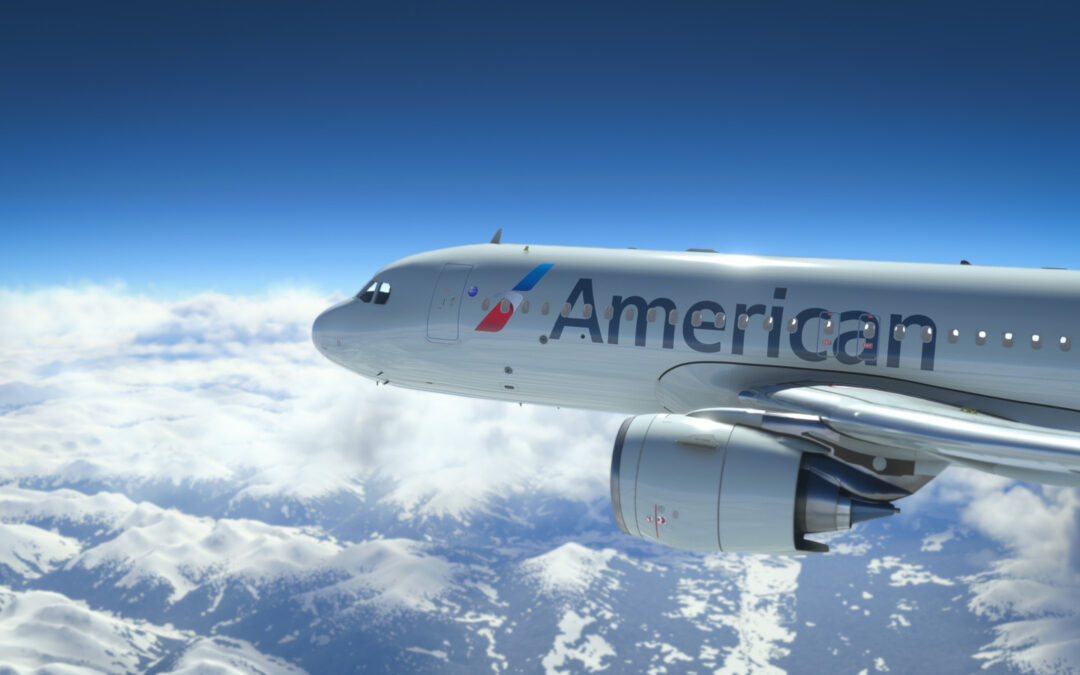
Passenger seat complaints aren’t new for American Airlines, from flyers taking issue with the carrier’s cramped conditions to the lack of seatback screens. But one famous passenger recently turned his American Airlines downgrade experience into a viral — and catchy — callout song.
Actor Warwick Davis, best known to many travelers for his roles in the “Star Wars” and “Harry Potter” franchises, posted on X, formerly known as Twitter, that he had been bumped from the premium cabin on American Airlines after a delay. A few weeks later, he followed up with a song about the experience, saying he used the four-hour wait while American fixed the plane to make light of his frustration.
According to the song, Davis arrived at the airport with a first-class boarding pass, expecting to sit in the front cabin. However, after a lengthy delay, he was moved to economy class. The reason hasn’t been confirmed, but it could have been anything from a broken seat to a plane switch, which may have reduced the number of first-class seats.
When an airline sells a seat in a premium cabin and then puts the passenger in a lower cabin instead, U.S. Department of Transportation refund rules apply. But adding to the controversy, American Airlines recently changed its refund policy in its Conditions of Carriage, meaning some downgraded passengers may receive less than the actual price difference between cabins, with refunds “issued at 40% of the ticketed fare on the affected segment.”
It’s not clear whether Davis personally received a refund under American’s new 40% downgrade formula, as the song only says the carrier promised compensation at a later date. But his story is exactly the kind of scenario that shows why the policy is getting attention.
Warwick Davis Said He Was Bumped From American Airlines’ Premium Cabin

Davis first posted about the issue on May 31, saying he had been bumped from business class by American Airlines after delays. On June 19, he posted again, this time with a song about his flying experience with the company.
In the song, Davis framed the incident with self-deprecating humor, which made it more relatable than a standard celebrity complaint. He joked about legroom, which given his short stature of 3’6″, was particularly funny.
“I’m Warwick Davis, I know a thing or two about being small,” the song says. “But somehow you still manage to make me feel 10 feet tall. What I ever do to you?”
American Airlines could downgrade a passenger for several reasons. The airline may swap aircraft after a mechanical issue, replace a plane with one that has fewer first-class or business-class seats, block a broken premium seat, or need to reseat passengers for operational reasons.
None of those situations necessarily means the airline acted maliciously. But it’s still frustrating when passengers don’t receive the class of service that they purchased.
American Airlines Responded To Warwick Davis’ Downgrade Callout
American Airlines was quick to laugh at itself along with Davis. The airline responded on X to the callout post, saying, “Although we sincerely apologize for the extended travel delay, we’d be remiss not to share how much we appreciated your creative and humorous recap of the experience.”
However, commenters weren’t ready to let American Airlines off the hook. “Not ok American Airlines don’t try to spin it because he’s a talented man who made this creative video,” one wrote. “Nope that was a Fail on your part.”
On the other hand, commenters did appreciate Davis’ humor in making light of a tough situation. “This song is genius!” one wrote, adding, “So sorry about your delay but will be singing this for days.”
Another said, “All the sympathies. But this SLAPS!!”
American’s New Rule Says Downgrades Get A 40% Refund

American Airlines’ current Conditions of Carriage state that the airline promptly and automatically refunds customers for eligible cancellations or significant flight itinerary changes when the customer chooses not to fly, to accept rebooking, or to accept other compensation.
The same section lists “downgrades to a lower cabin” and then note the controversial policy that “refunds are issued at 40% of the ticketed fare on the affected segment.”
That flat percentage has led to a lot of backlash.
A 40% refund might be fair in some cases. But premium cabins don’t always cost only 40% more than economy. On many routes, first class or business class can cost several times more than coach. If a traveler paid $1,200 for first class and the comparable economy fare was $300, the actual cabin difference would be $900. A 40% refund of the original fare would be $480, leaving the passenger short by $420 compared with the apparent fare difference.
American Airlines’ policy change on refunds actually led to a complaint filed with the DOT. The formal complaint, filed May 26, states, “40% is not a reasonable estimate of the difference in price between AA’s coach and business cabins. AA’s business class cabin prices are routinely several times that amount.”
It also urges the DOT to deem the policy deceptive and unfair and order American Airlines to “refund at least the actual fare difference between the fare the consumer purchased and the lowest fare for sale in the cabin he or she was downgraded to, with that lowest fare calculated as of the time of purchase.”
DOT Rules Say The Fare Difference Matters For Involuntary Downgrades

According to DOT, if a consumer is involuntarily moved to a lower class of service and decides not to travel, the passenger is entitled to a refund. If the downgraded passenger continues to travel on the flight, the passenger is not entitled to a full refund of the airfare, but the airline must refund the difference between the original and downgraded fares.
|
Flight disruption scenario |
Is the passenger entitled to a refund? |
|---|---|
|
Canceled flight |
Yes, if the airline canceled the flight and the flyer chooses not to accept alternative travel, travel credits, vouchers, or other compensation offered by the airline. |
|
Schedule change/significant delay |
Yes, if the airline delays the flight or significantly changes the flight and the consumer chooses not to accept alternative travel, travel credits, vouchers, or other compensation offered by the airline. |
|
Unused ticket |
Yes, if the fare purchased was a fully refundable fare. |
Meanwhile, the DOT also goes into greater detail about an airline’s responsibility when a passenger’s travel is interrupted or changed. While some circumstances are considered out of the airline’s control, others have very specific conditions regarding refunds and compensation that are due to a passenger who experiences travel changes.

So, what counts as a significant change or delay?
- Early departure: the passenger is scheduled to depart earlier than the original scheduled departure time by 3 hours for domestic flights or 6 hours for international flights
- Late arrival: the passenger arrives later than the original scheduled arrival time by 3 hours for domestic flights or 6 hours for international flights.
- Change in origin or destination airports: The flyer is scheduled to leave or arrive at a different airport than originally scheduled.
- Added connections: The passenger’s itinerary is changed with more connections added than the original itinerary.
- Downgrades: The passenger is involuntarily moved to a lower class of service.
- Changes for disabled passengers: If disabled flyers experience changes to connecting airports on their itinerary, or their aircraft is changed to one with fewer accessibility features.
For travelers with disabilities, the issue may be even more important. DOT’s refund rule specifically recognizes that a downgrade can affect accessibility features a passenger needs, including seat characteristics such as width, recline, pitch, and legroom.
The DOT also states that airlines must inform consumers when they are entitled to a refund. If the tickets were purchased directly from the airline, customers are entitled to an automatic refund within seven business days if they don’t accept alternative travel or compensation.
It’s important to note that DOT’s 2024 refund rule clarified that a downgrade to a lower class of service is a significant change. In the Federal Register discussion of the rule, DOT said airlines are obligated to refund fare differences when passengers choose to travel in a lower class of service, regardless of whether the downgrade was caused by overbooking or another situation.
Why Davis’ American Airlines Downgrade Is A Useful Example
Premium-cabin downgrades can happen to any passenger, including famous stars. They may be more common during delays and aircraft swaps, when airlines are trying to keep a flight operating with whatever aircraft is available. But if the replacement plane has fewer premium seats, someone loses.
Those situations become especially frustrating because passengers often don’t know how the airline calculated the refund. Was it based on the fare difference at the time of booking? The fare difference on the day of travel? The average fare difference? A fixed percentage?

American’s current policy states the refund will be 40% of the ticketed fare on the affected segment. But the DOT’s guidance says that a passenger who continues to travel after a downgrade must receive the difference between the original and downgraded fare.
The difference can be hundreds or thousands of dollars on some flights.
That’s why this story has legs beyond celebrity travel. Davis may or may not have been affected by the 40% policy directly. But his public complaint calls out American Airlines for a rule that most travelers might only learn about after losing the seat they paid for.
What Travelers Should Do If American Airlines Downgrades Them

Passengers who are involuntarily downgraded should document everything before leaving the airport.
That means saving the original boarding pass, the new boarding pass, the ticket receipt, screenshots of the cabin purchased, seat assignment, fare class, app notifications, emails, and any messages from American about compensation. If the downgrade was due to an aircraft swap or a broken seat, ask the gate agent or customer service representative to note the reason in the reservation.
Travelers should also ask for the exact refund calculation in writing. If American applies the 40% formula, compare that amount to the fare difference between the purchased cabin and the cabin flown. If the refund appears too low, file a complaint with American Airlines first, and then with the DOT if it is not resolved.
It doesn’t hurt to make a catchy, viral song about it, either.

Recent Comments