
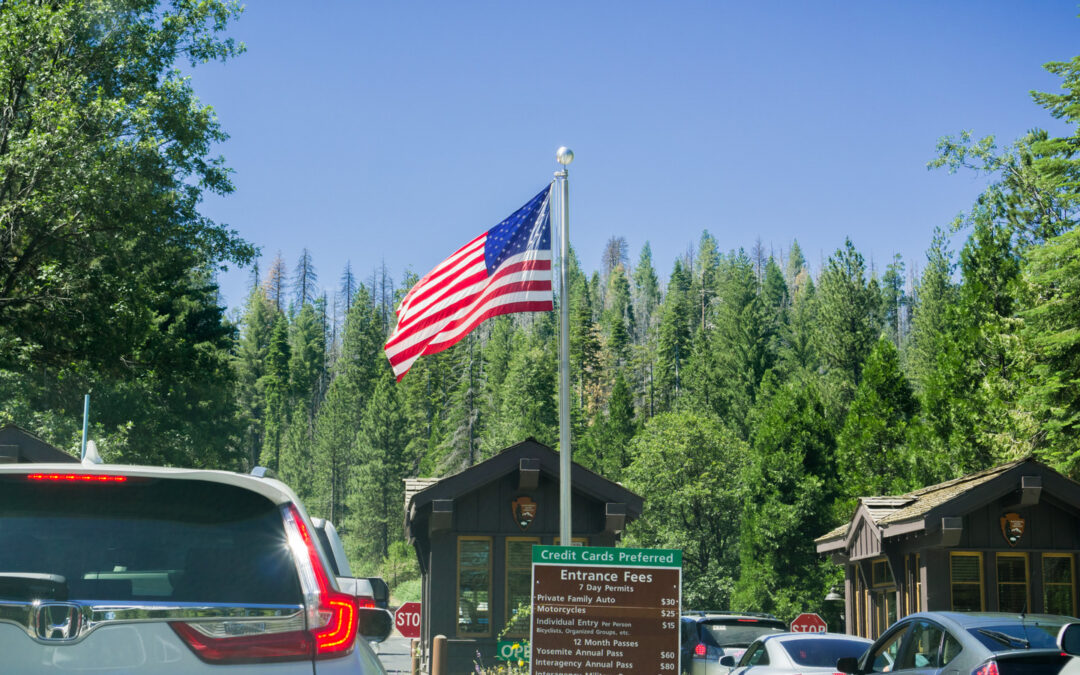
Juneteenth is no longer a free entry day at United States national parks in 2026, but a new congressional proposal could eventually reverse that change.
Earlier this year, TheTravel covered U.S. national parks abandoning fee-free entry days on holidays such as Juneteenth and Martin Luther King, Jr. Day. And while the move sparked major backlash due to alleged “racist” undertones, it became official following the White House’s Executive Order aimed at reversing “illegal and immoral discrimination programs, going by the name ‘diversity, equity, and inclusion’ (DEI), into virtually all aspects of the Federal Government,” according to the administration.
But now, a bill called the Encouraging Public Service in Our National Parks and Public Land Act is drawing new attention after National Parks Traveler reported that 35 organizations have backed the effort to restore Juneteenth, Martin Luther King, Jr. Day, and several other public-service dates as free entry days on federal public lands.
For travelers, the legislation, initially proposed in late 2025, wouldn’t make park entry free on Juneteenth immediately. It would still need to pass Congress and be signed into law. But, if enacted, it would make certain free entry days harder for future administrations to remove.
Bill S.3429 Would Restore Juneteenth And MLK Day As Free Park Days

The proposal would direct the Secretary of the Interior to officially designate six recurring fee-free holidays across national parks and other federal recreational lands.
Important dates and holidays outlined in the bill:
|
Date |
Significance |
|---|---|
|
Third Monday in January |
Martin Luther King, Jr. Day |
|
Dates vary (typically in April) |
First day of National Park Week |
|
June 19 |
Juneteenth National Independence Day |
|
August 4 |
Great American Outdoors Day |
|
Fourth Saturday in September |
National Public Lands Day |
|
November 11 |
Veterans Day |
That list includes several dates that had long been tied to service, volunteerism, conservation, and public access. Juneteenth and MLK Day are the most politically charged parts of the fight, but the bill is broader than those two holidays.
According to the bill’s current language, “fee-free days for units of the National Park System and other Federal recreational lands and waters—have been opportunities for the people of the United States to support units of the National Park System and other Federal recreational lands and waters through community service activities; and should align with important dates and holidays to show our national pride and encourage volunteerism.”
National Parks Traveler reported that 35 organizations sent a formal letter supporting the bill. The groups argued that free entry days remove barriers for people who want to visit public lands and historic places, including lower-income travelers who may be priced out by entrance fees.
“Public lands are national treasures that belong to everyone, and getting a new generation outside and enjoying them is vital to their protection,” said Steve Pedery, conservation director with Oregon Wild. “The Juneteenth fee-free day created an opportunity for families from all economic backgrounds to fall in love with public lands, and it should be restored.”
That doesn’t mean every national park visitor currently pays to enter. Many National Park Service sites are free year-round. But at major fee-charging parks, removing entry fees on certain holidays can be meaningful for families, especially when those fees are stacked on top of gas, lodging, food, timed-entry reservations, or shuttle costs.
What Changed On The 2026 National Park Calendar
The National Park Service’s 2026 fee-free calendar looks very different from previous years.
Under President Donald Trump, the administration removed both Martin Luther King, Jr. Day and Juneteenth from the 2026 National Park Service free entry calendar, replacing the previous lineup with what the Department of the Interior described as “patriotic fee-free days.”
The new list includes Flag Day, which is also President Trump’s birthday, on June 14, Presidents’ Day, Memorial Day, Independence Day weekend, Constitution Day, Theodore Roosevelt’s birthday, the National Park Service’s 110th birthday, and Veterans Day.

The DOI announced the new calendar in November 2025 as part of a broader “America-first” park access policy. That same rollout also changed annual pass pricing, setting the America the Beautiful annual pass at $80 for U.S. residents and $250 for nonresidents. NPS now says free entrance days apply only to U.S. citizens and permanent residents, while nonresidents must pay regular entrance fees and any applicable nonresident fees.
According to Interior Secretary Doug Burgum, “President Trump’s leadership always puts American families first. These policies ensure that U.S. taxpayers, who already support the National Park System, continue to enjoy affordable access, while international visitors contribute their fair share to maintaining and improving our parks for future generations.”
Politicians Were Quick To Oppose The Trump Administration’s Changes To Free Park Days
Right now, the fee-free calendar is set administratively. However, the newly-proposed bill would put certain public-service days into law, limiting how easily the list could be reshuffled in the future.
“Free entry days were created as a way for our National Parks to encourage public service and volunteer work,” said Senator Cortez Masto when the bill was proposed. “It’s our national responsibility to protect and maintain our public lands – so let’s recommit to ensuring free entry days promote this patriotic act of service, not stroke the President’s ego.”
Masto was not the only politician to speak out against these changes.
“Cutting two national holidays, when many families are already off of work and school, from the list of free entry days will prevent millions of working families from getting outside and enjoying the beauty and recreation our national parks offer,” Senator Ruben Gallego also said at the time. “I’m proud to support this bill to restore these important holidays and make sure the focus stays on the parks, not the President’s pride.”
What This Means For Travelers Planning National Park Trips

Free entry days can be useful, but they are not always the best times to visit.
At popular parks like Yosemite, Zion, Grand Canyon, Glacier, Acadia, Yellowstone, and Rocky Mountain, free entry dates often mean larger crowds, fuller parking lots, longer entrance lines, and higher pressure on shuttle systems. And, while a waived entrance fee helps, it doesn’t cancel every cost. Timed-entry reservations, camping fees, tour fees, parking charges, and other permits may still apply.
Still, supporters of the bill say these fee-free days matter because they lower the first barrier to entry. That’s especially true for families planning a day trip to a historic site, battlefield, monument, seashore, or national recreation area rather than a week-long vacation built around a famous national park.
“Entrance fees at national parks discriminate based on wealth, posing barriers to access by lower-income communities,” said Erik Molvar, executive director of Western Watersheds Project. “Every day should be a fee-free day at America’s National Parks, but at the very least, fees should be waived for important holidays celebrating our national diversity such as Juneteenth and Martin Luther King, Jr. Day.”
MLK Day has also been closely tied to service projects. Community groups often use the federal holiday for volunteer cleanups, trail work, educational programming, and first-time park visits. Juneteenth, which marks the end of slavery in the U.S., had more recently been added (in 2024) as a free entry day before being removed from the 2026 lineup.
The Proposal Still Has A Long Way To Go

For now, travelers shouldn’t plan for Juneteenth being a free entry day at national parks. The current NPS calendar is the one visitors need to follow, and Juneteenth and MLK Day aren’t listed as fee-free dates this year.
The bill’s path forward is still up in the air. It has Democratic backing and outside support from conservation and public-land groups, but it still needs to move through Congress. Until that happens, the administration’s 2026 calendar stays in place.
However, if the Encouraging Public Service in Our National Parks and Public Land Act passes, future travelers would see those holidays restored as recurring free entry days — and it would be harder for future administrations to change. The Secretary of the Interior could also add additional free entry days at their discretion.

Recent Comments