
With everything that has happened in the last one year, international travel from or to the U.S. isn’t as simple as it used to be. A classic example is the visitors to the U.S. for the World Cup, who have been warned to carry their passports at all times, in light of random immigration checks done by the U.S. Immigration and Customs Enforcement (ICE). Even earlier, Americans couldn’t typically travel outside the country on a whim, without a passport or any other documents. Europeans, on the other hand, can visit many international destinations within the European Union on a short trip by land, sea, or air and do not strictly need a passport.
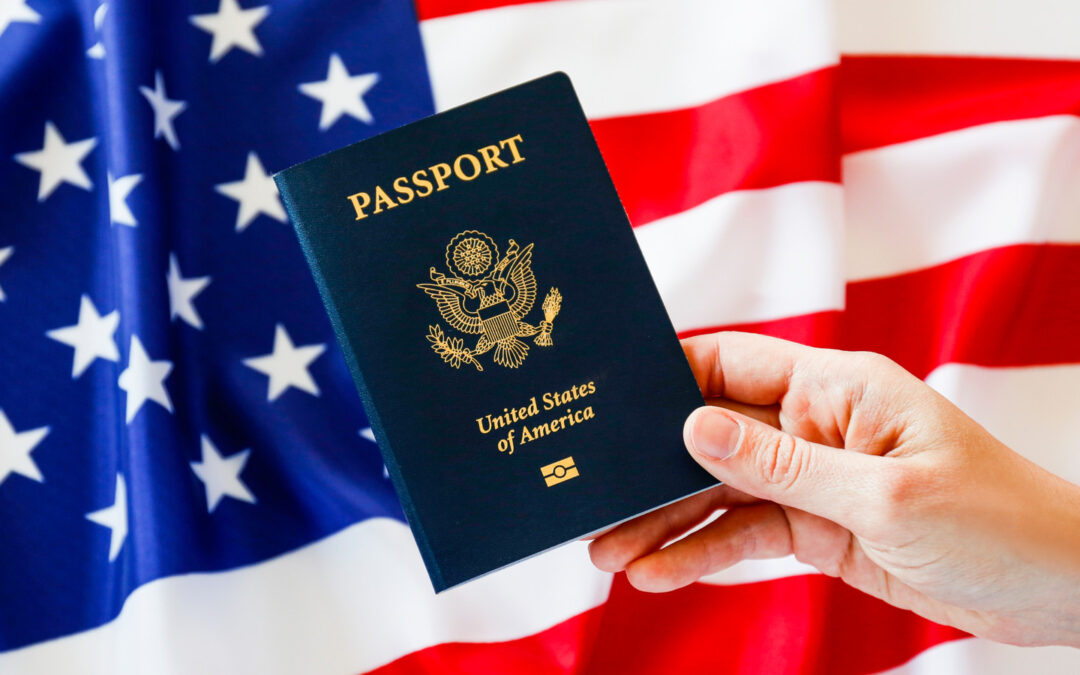
In America, the U.S. passport book is the standard document required for all international travel, including air, land, and sea. Alternatively, the wallet-sized passport card is more budget-friendly and highly durable. However, the card is valid only for land and sea border crossings to Canada, Mexico, the Caribbean, and Bermuda. American citizens enjoy the option to choose their passport type—passport book or card or both—and it determines where they can travel. For travel in 2026, both can be powerful documents, based on the traveler’s individual needs.
Passport Books Allow Travel To Any International Destination, By Air, Land, Or Sea

A passport allows you to travel internationally. The U.S. passport book allows universal access and is valid for international travel by air, sea, or land to over 150 countries worldwide. It doesn’t guarantee entry, as each country has its own visa process, although some countries do allow U.S. passport holders free entry.
Still, the passport book does have one drawback. It is too large to fit into a standard wallet, requiring travelers to carry it in a bag or a specialized travel wallet. Still, it has plenty of pages (standard size—26 pages, large size—50 pages) for travel stamps from each country and serves as a form of identification both domestically and abroad. Both book sizes cost the same price.

Passport book basics:
- Use for domestic and international travel
- Meets REAL ID requirement
- It has pages for entry and exit stamps.
- It can be used for air, land, and sea travel.
U.S. passport books are available in two lengths: the Standard Book (26 pages) and the Large Book (50 pages). Both books are the exact same physical size and also cost the exact same price.
U.S. Passport Cards Are Valid For Travel By Land Or Sea Only To Neighboring Countries

Passport cards are also accepted for international travel, just like passport books, but there’s a key difference. With a passport card, you can only travel internationally across land or sea, not via air. Of course, you can also use the passport card as a form of ID for domestic flights—it just isn’t good for international travel.
Thus, passport cards are quite handy for people living near international borders, such as those living in cities that border Canada or cities along the Mexico-U.S. border.

Passport card basics:
- Use for domestic and international travel
- Meets REAL ID requirement
- No pages for entry/exit
- Can be used for land and sea travel
- Can be used for domestic flights as ID
A passport card can also be valuable to those who love to cruise. While on a cruise, if you stop at international ports, a passport card will grant you entry (then again, so would a passport). You don’t always need a passport to go on a cruise, but it will be crucial for some port stops.
To obtain a passport book or card, there is no substantial difference between the two. To obtain a passport card, you’ll need to follow the same steps that are required to get a passport. In fact, you can get both at the same time, although realistically speaking, it’s a bit overkill to have both. The question remains: Is there an advantage of one over the other?
Which Travel Document Is Best For Americans: The Passport Book Or Passport Card?

Whether the U.S. passport book or passport card is more powerful in 2026 comes down to where you plan to travel and via what mode of transport.
As the U.S. Department of State confirms, U.S. passport books and passport cards are both a valid form of ID and proof of U.S. citizenship. The card affords land and sea travelers passage to Canada, Mexico, Bermuda, and a handful of Caribbean countries.
The U.S. Department of State website says, “The card is proof of U.S. citizenship and identity. It has the same length of validity as the passport book.”
The U.S. passport card is slightly cheaper than a passport book, so if your primary need for international travel involves land crossings or cruises, you may not need a passport book.
Passport Book vs Passport Card, by the numbers
A passport card is less than half the price of a passport book, for adults applying for the first time (documents for children under age 16 are slightly cheaper).
|
Feature |
Passport Book |
Passport Card |
|---|---|---|
|
Validity |
– Ten years (adults) – Five years (under 16) |
– Ten years (adults) – Five years (under 16) |
|
Size |
– 5” x 3½” |
– Credit card size |
|
First-time Cost |
– $165 (adults) – $135 (under 16) |
– $65 (adults) – $50 (under 16) |
|
Renewal Cost |
– $130 (adults) – under 16 cannot renew |
– $30 (adults) – under 16 cannot renew |
|
Real ID |
– Valid alternative to REAL ID |
– Valid alternative to REAL ID |
Typically, it can take between four and six weeks to process a new passport application. Expedited processing within two to three weeks can be requested with a fee of $60. All fees are split into two parts: the fee paid to the U.S. State Department and a $35 execution/acceptance fee paid to the facility processing the application.
To make a judgment on which of the two is more powerful, a passport book lets you travel anywhere in the world without a second thought, while a passport card allows ground or sea travel only, and that too, only to neighboring countries.

Recent Comments