
There’s a rare raptor that has the capacity—and, quite frankly, the nerve—to eat an entire monkey. Considering there’s a separate, terrifying bird out there that hunts crocodiles (and anything else it wants) and another bizarre bird that vomits acid and poops antiseptic, a giant flying eagle with the capacity to devour monkeys is not that unbelievable.
What’s even more incredible is that the title of “monkey-eating eagle” has been given to such a magnificent creature that’s always been more than what it feasts on. The fascinating animal is the largest living eagle in the world, the Philippine Eagle. While Acadia National Park may be the best place to spot bald eagles in the U.S., the Philippine eagle is only found in one country: the Philippines.
The Philippine Eagle Is The Philippines’ Finest, Largest, Most Powerful Fowl

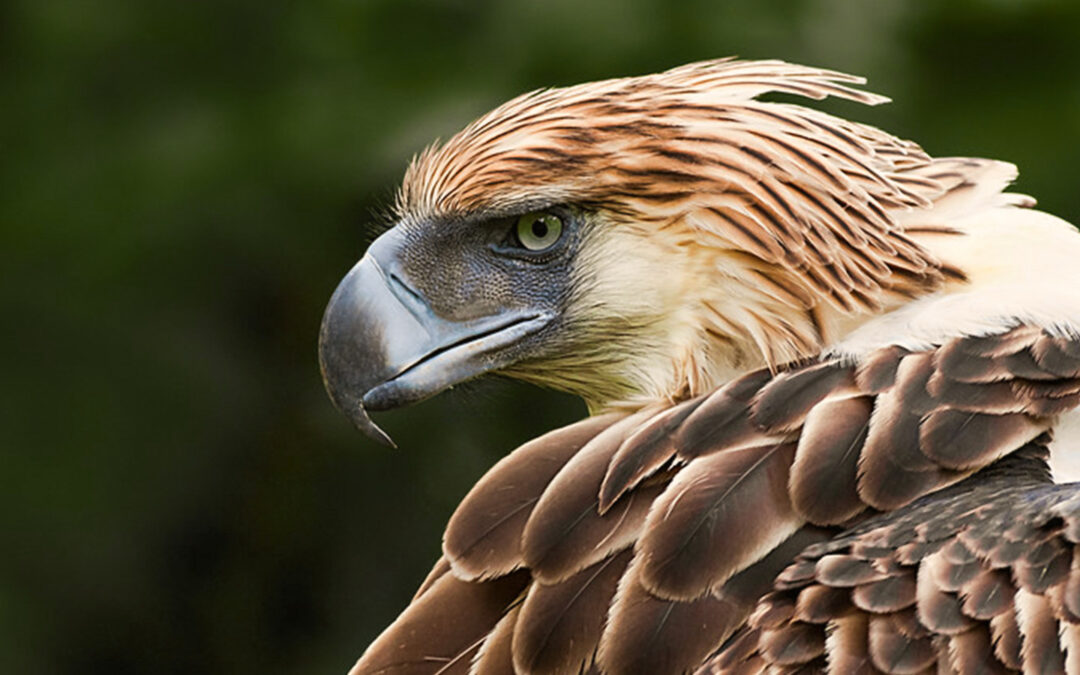
In the forests and mountains of the Philippines resides its national bird, a king among raptors. Considered the largest extant eagle in the world, the Philippine eagle is recognizable by its white chest, brown back, giant blue-gray beak, three-inch talons, and light brown crown on its head that, when standing up, resembles a mix between a lion’s mane and a mad scientist’s hair.
Physical characteristics of the Philippine eagle
|
Wingspan |
Seven feet. |
|---|---|
|
Height |
Three feet (from the crown’s tip to the tail). |
|
Weight |
18 pounds. |
|
Eyes |
Can see eight times clearer than humans. |
The Philippine eagle is technically the largest extant eagle, meaning it’s the largest eagle that’s not gone extinct. It is also an endemic species, meaning it’s native to only one place in the world, though it’s not the only endemic species in the Philippines. While the Philippines makes up several thousand islands, some of which have exceptional beach destinations, the Philippine eagle only resides on four of them: Mindanao, Luzon, Leyte, and Samar.
The most powerful eagle in the world
The Philippine Eagle is also called the most powerful eagle in the world, though it sometimes shares the title with the Harpy Eagle from Central and South America. The dominant apex predator in the Philippines can exert up to 500 psi of grip strength. With its exceptional strength and ability to maneuver through dense tropical canopies, it is known for hunting large and agile prey.

Not only is this raptor the national bird of the Philippines, but it also holds a sacred relationship with the indigenous peoples of the island. According to Bukidnon tradition, the Philippine eagle is considered the messenger of God and represents strength, tenacity, and resilience. Killing an eagle can result in up to 12 years in prison.
The Unique Eagle In The Philippines Was Called The “Monkey-Eating” Eagle
The Philippine eagle was initially called the “monkey-eating” eagle because of its ability to eat the macaque monkeys on the islands. While the capability to consume a decent-sized mammal is impressive (even if unfortunate for the monkeys), the title suggests an exclusivity to one animal and downplays its well-distributed diet among smaller mammals, reptiles, and other bird species.
It’s an apex predator, meaning that it ranks at the top of the food chain in its habitat. Apex predators, such as the orca whale in the ocean or wolves and grizzly bears in the Rocky Mountains, are a crucial part of any ecosystem, as they keep smaller animal populations from overcrowding and throwing things off balance. This includes the animal it gained notoriety for.

What else is in the Philippine eagle’s diet?
- Flying lemurs
- Flying squirrels
- Asian palm civets
- Monitor lizards
- Fruit bats
- Cloud rats
- Snakes
- Owls
Even so, the Philippine long-tailed macaque monkey can match the size of a Philippine eagle and does fight back, making the hunt for it potentially dangerous. The eagles often hunt in pairs—one distracts the monkey while the other swoops in from behind.
How did the monkey-eating eagle get its current name?
An American Peace Corps volunteer, Robert S. Kennedy, served in the Philippines, returned to study the bird further, and in 1977, ended up lobbying for the eagle’s common name to be changed from “monkey-eating” eagle to Philippine eagle.
The Philippine Eagle Is Endemic And Endangered
Like many island-born birds, such as the Cuban blue-headed quail dove (dubbed the “Dodo of the Caribbean”), the Philippine eagle faces unique threats as an IUCN critically endangered species with limited land mass to survive on. In the Philippines, where land development has continued since the 1950s, those threats include logging and hunting, as well as armed groups on the island of Mindanao.
Current Status of the Philippine eagle
|
Number of individual eagles |
Less than 800 |
|---|---|
|
Number of breeding pairs |
Less than 400 |
|
Number of breeding pairs in 1910 |
1,900 |
|
Number of eggs laid |
One egg every two years |
Deforestation not only takes away the eagle’s habitat, as each individual needs between 4,000 and 11,000 hectares of land to thrive, but also the habitat of its prey. The diminishing population is worrisome, especially when compared to less than a hundred years ago, when the species occupied many more Philippine islands than just the current four. The few eggs laid by the female eagle make their population maintenance all the more difficult.
Fortunately, eagles are beloved around the world, appearing on various countries’ flags, and this endangered raptor has a support system through the Philippine Eagle Foundation (PEF). First founded in 1987, the non-profit is dedicated to both the eagle’s long-term conservation and the biodiversity of the islands through research, education, forest restoration, and community involvement.
The non-profit also operates the Philippine Eagle Center on Mindanao Island, a rehabilitation center where the public can view resident eagles and other birds of prey, go on a walk through the rainforest, or take a guided tour. PEF also works closely with local indigenous communities, like the Bukidnon people, to continue monitoring and protecting the remaining population.
Their efforts help determine what remaining habitat left on the islands is most suitable for eagles to thrive in and create priority conservation areas as a result.

As concerning as it is that there’s such a relatively small number of Philippine eagles, their endangerment has brought to light the importance of raptors in maintaining local ecosystems that we all rely on. Additionally, it highlights the passion and tenacity of conservationists who work collaboratively and tirelessly to keep these magnificent birds in our world.

Recent Comments