
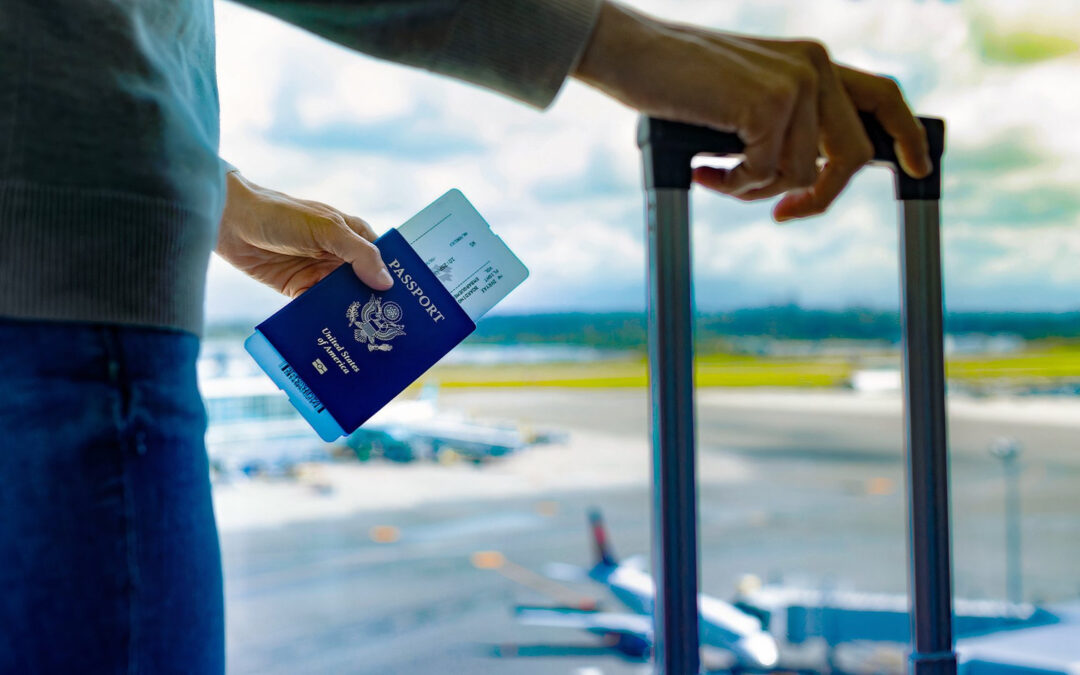
For decades, passports have been viewed as the ultimate international travel document. As long as you have a valid passport and a booked flight, most people would assume they are ready to hit the skies. However, travel in 2026 looks very different to how it did even a few years ago, and the U.S. Department of Transportation is warning Americans that a valid passport alone is no longer enough to fly.
Along with new passport rules that are expected to catch thousands of Americans off guard this summer, U.S. travelers are having to navigate modernized border controls, stricter airline travel policies, and rapidly changing entry requirements.
While these changes are not necessarily making travel harder, they are changing how experienced travelers prepare. International travelers are carrying more paperwork, including proof of onward travel, entry authorization, visas, secondary identification, and printed confirmations, to avoid disruptions abroad.
As the travel industry continues to modernize and adapt to a digital world, “document redundancy” is becoming just as important as remembering your passport in the first place.
Digital Travel Authorizations, Not Just Passports, Are Becoming Essential

One of the biggest changes U.S. travelers have had to navigate through is the expansion of Electronic Travel Authorization systems. These systems, similar to the U.S.’s ESTA program, are not technically visas, but do require travelers to obtain online approval to visit the country they are flying to before departure.
In November 2025, the U.K. announced that as of February 2026, citizens of 85 countries, including America and Canada, will need to obtain an ETA in order to visit, or risk being denied entry.
The European Union is also preparing to launch ETIAS (European Travel Information and Authorization System), which is due to come into effect in the fourth quarter of 2026, meaning U.S. travelers will have to complete an online screening process before arrival in the EU.
Americans are also being encouraged to prepare before flying to Europe by submitting photos and passport information online in order to avoid long lines in airports caused by the EU’s new Entry/Exit System. These requirements have confused travelers, who still assume that “visa free” still means “paperwork-free.”
Airlines are becoming increasingly involved in the enforcement of proof of legitimate travel because carriers can be fined for transporting passengers who do not meet entry requirements. While ETAs are usually linked to the travelers’ passports once approval is secured, this extra layer of verification encourages travelers to carry screenshots and printouts of certain documents in case anything goes awry, including:
- Authorization approvals
- QR codes for digital entry systems
- Digital boarding passes
- Travel insurance information
- Emergency embassy contact details
This shift shows that it is becoming increasingly unlikely that your passport will be all you need when traveling abroad. More and more countries are shifting to digital entry systems, requiring obtaining approval before departure, requiring more preparation than simply turning up at the airport with their passport.
Travelers Are Creating Backup “Document Kits”
International travelers are becoming increasingly concerned about losing access to important documents when overseas. While it is convenient to store all our travel information on our smartphones, this also leaves plenty of room for things to go wrong. If all our essential travel documents are only stored digitally, it only takes a dead battery, a lost phone, or poor airport Wi-Fi to turn your dream trip into a nightmare.
Unfortunate instances of theft and lost belongings can also occur when traveling, meaning access to passports, plane tickets, and emergency contact information can disappear without warning. To reduce this risk, many travelers think it crucial to have “document kits” consisting of backups (cloud-stored documents or physical copies) of important information.
“Document Kits” Can Consist Of:
|
Travel Backup |
Why It’s Important To Travelers |
|
Photocopy of passport |
Backup identification if passport is lost |
|
Emergency contact list |
Quick access to family and embassy information |
|
Printed flight confirmation |
Backup if airline apps or Wi-Fi fails |
|
Insurance policy information |
Medical or travel emergencies |
|
Prescription documentation |
Easier customs and medical verification |
|
Authorization approval |
In case it hasn’t linked with your passport |
|
Driver’s license |
Secondary ID |
Some airlines or border control officials may want to see proof of onward travel/return flights, accommodation, or event confirmation for major international events, so it is a good idea for travelers to carry back-ups of these documents too.
While it may seem like a lot of extra work to compile these backups, as travelers on Reddit explain, it is better to have them and not need them, than not have them and need them.
“If you’re at a border crossing would you be willing to give up your phone while the immigration person “goes in the back to verify documents”? Or if you’re in distress, would you want to chance a guard at your embassy telling you to leave because they won’t plug your USB drive into their PC to check your passport copy due to yours being stolen? While I generally dislike paper documents these days, travel documents printed seem like cheap insurance.” One commenter on Reddit pointed out.
Having documents organized ahead of time can help reduce anxiety when things go wrong, and even help travelers navigate the airport faster. One traveler noted on Reddit:
“Just print your boarding pass and confirmation info and stick them in a convenient place. Considering that power and thus wifi could be interrupted,or God forbid you spend too much time on your phone and just when it’s your turn to board your phone goes belly up. This past weekend my wife and I got split up at TSA, she was PreCheck and some how I wasn’t, her phone was dead but she had the hard copy so she sailed through.”
When it comes to modernized travel, it is no longer the case that you can simply turn up to the airport with just your passport and hope for the best. Things can go wrong and experienced travelers are preparing for that.
Health, Insurance, And Emergency Documents Are Quietly Returning

Even though many pandemic-era restrictions have faded, many travelers remain far more documentation-conscious than they were before 2020. Preparing for health situations and emergencies has become a routine part of trip planning, particularly for international travelers visiting multiple countries or remote destinations. With the situation around the world becoming ever more unpredictable, travelers are increasingly carrying:
- Travel insurance documents
- Medication documents
- Emergency medical information
- Required vaccination records
- Embassy contact information
- International driving permits
- Emergency evacuation coverage details
Having these documents can help travelers where language barriers or limited internet access can further complicate emergencies overseas. Unexpected situations such as medical emergencies, flight cancellations, severe weather events, and political instabilities have all become more of a concern in recent years, and rather than just assuming everything will go smoothly, travelers are building contingency plans into their trips from the start.

The U.S. Department of State outlines the insurance you should acquire before you travel, while travel insurance companies recommend that you should keep a physical copy of your policy number as well as numbers of emergency hotlines, just in case.
Travel in 2026 is no longer about turning up to the airport with just your passport. As it continues to modernize, travelers have to prepare more carefully before leaving home. For Americans traveling overseas this summer, obtaining pre-travel authorization to visit certain countries, preparing “document kits”, and having contingency plans are becoming standard rather than extra precautions.
A passport is still essential, but increasingly, it’s one document in a much longer travel checklist.

Recent Comments