
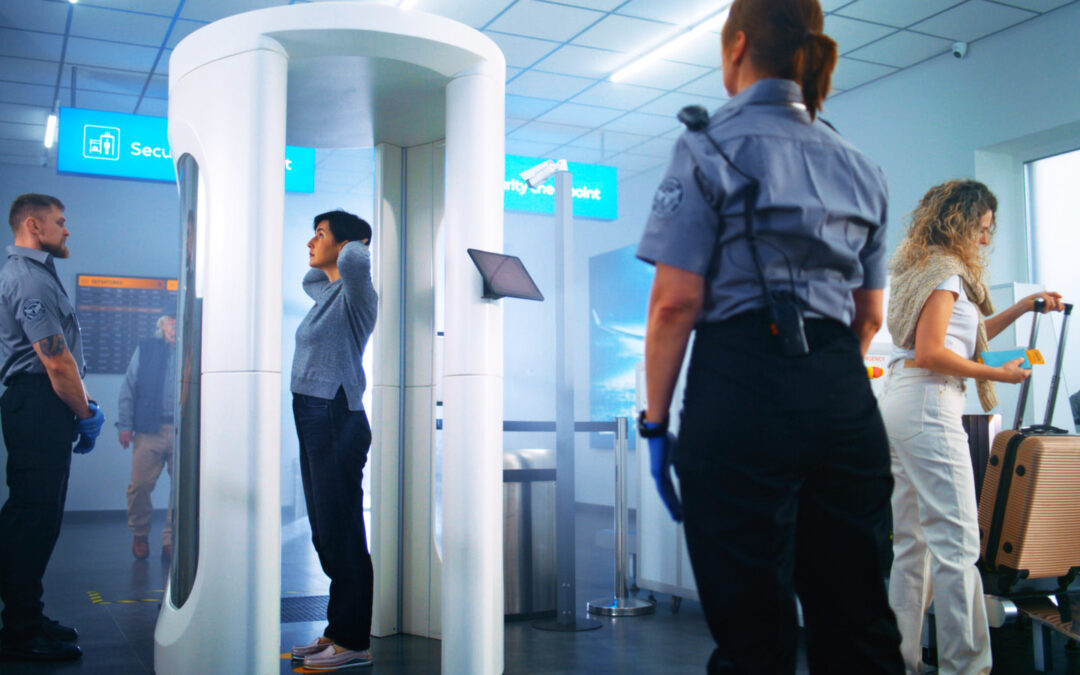
With the introduction of REAL ID for travel in the US, chatter about a bill that would abolish the TSA and replace it with privatized security, and changes that mean cabin crew can no longer breeze through security, there’s a lot of airport-related news to consider right now. However, wind the clock back to the early 2000s, and news involving airport security X-ray scanners abounded for a horrifying reason.
An inappropriate discovery left TSA agents and passengers alike extremely uncomfortable: X-ray scanners were able to see everything. Yes, everything under a person’s clothes, leaving nothing to the imagination. While airport security is stressful for many people, this discovery made the screening process even more embarrassing for all involved, prompting changes to these machines shortly after their invasive technology was revealed to the public.
The Airport X-Ray Scanners Used To Be Able To See Literally Everything

Back in 2009, an attempted bomber tried to smuggle explosives in his underwear on a flight from Amsterdam to Detroit, which news outlets like the BBC reported on at the time. Luckily, this didn’t result in any actual explosions, but the fact that he got through security was a huge concern for border security across the world. As a result, new scanners were implemented across the United States and the United Kingdom, as well as a few other nations worldwide.
However, the problem with these new scanners was that they could see everything. Yes, absolutely everything. People who walked through the Rapiscan scanners showed up completely nude. Now, this more intense scanner was used as a reaction to an underwear bomber, so it makes sense, but it also horrified TSA workers and passengers who found out about it.
Timeline Of U.S. Airport Incidents With X-Ray Machines
- 2009 Incident: An attempted underwear bomb plot prompted the deployment of full-body Rapiscan scanners.
- Privacy Crisis: The machines rendered passengers fully nude, sparking public outcry and privacy concerns.
- Phase-Out by 2013: Rapiscan failed to meet software privacy deadlines, leading to the complete removal of the scanners.
- Modern Scanning: Today’s millimeter wave scanners display generic avatars with Automated Target Recognition (ATR).
- Future Tech: Next Generation Checkpoints (NGSC) and facial biometrics are speeding up security and rolling back liquid limits.
Due to the uproar, the machines were quickly swapped out for less intrusive scanners. While you can still see a more general human form, you can’t see individual anatomy on the newer scanners. This is a much less X-rated X-ray process and less embarrassing for everyone involved. Of course, the scanners still show any suspect items on someone’s person for further inspection down the line.
When Were The X-Ray Scanners Changed?

With the bomb attempt happening around Christmas 2009, US airports moved quickly to change their airport scanners to ones that would be able to see more of a person’s body. In fact, 30 US airports installed a total of 174 scanners, and the 10 biggest airports in the UK installed the same machines. This was all done by 2013. However, they didn’t last too long, despite the scanners costing $180,000 apiece.
By June 2013, these scanners were removed. The company, Rapiscan, said that they’d be able to get a congressionally mandated software update rollout on the scanners to remove this privacy violation, but were unable to meet the deadline. As a result, these machines were phased out and replaced with ones that have Automated Target Recognition (ATR) software, created by a company called L-3 Communications.
Evolution of Airport Security Technology
|
Era / Technology |
Imaging Capabilities |
Privacy Safeguards |
Primary Purpose |
|
Rapiscan Scanners (2009–2013) |
Displayed complete anatomical nudity to screeners |
None initially; failed to implement privacy software in time |
Detect non-metallic threats concealed under clothing |
|
Millimeter Wave with ATR (2013–Present) |
Displays a generic human avatar |
Outlines target areas without showing body contours |
Detect concealed items while preserving passenger dignity |
|
Next-Gen Checkpoints (NGSC) (Current Rollout) |
Advanced 3D bag scanning |
Standardized privacy controls |
Allows liquids and electronics to remain inside bags |
Nowadays, none of these visually invasive scanners are left in airport circulation.
What Can Airport Scanners See Now?

Now, modern-day airport scanners are a lot more flattering. The millimeter wave machines used now just show a generic human form, without specific anatomical details. They have privacy software installed, too, so that even if something is flagged, it highlights the general area, rather than revealing intimate details. This gives the TSA agents a clue in terms of where to focus a specific bodily search.
It’s one of many common airport myths that security scanners can see anything inside the body. This includes items like tampons, metal pins or screws for medical purposes, or implants. They can see under the clothes to skin level, and that’s about it. If there are any metallic or non-metallic items that shouldn’t be there, this is flagged and evaluated by individual agents and personal searches.
Are There Any New Airport Security Changes Coming Up?

With security technology changing at a fast rate, there are some new airport security changes coming up. Both in the US and the UK, new baggage scanners, known as Next Generation Security Checkpoints (NGSC), are being rolled out to make security a breeze. This means you’ll be able to keep your 100ml liquids and your electronics in your bag for scanning, therefore speeding up the security process.
Airports in the UK are also planning to scrap the 100ml liquid limit for hand luggage, and this is expected to be the nationwide standard in a few years, once the NGSC scanners are in all UK airports. In the US, facial recognition is being used at around 200 US airports to speed up security, matching the biometric data to the digital REAL ID now in place.
So, if you’re traveling through an airport, you can rest easy knowing that TSA agents can no longer see you completely nude. Hopefully, that will help make the whole airport security process a little less stressful for everyone.

Recent Comments