
This article was updated on July 9 at 7:00 PM EST with reactions from travelers
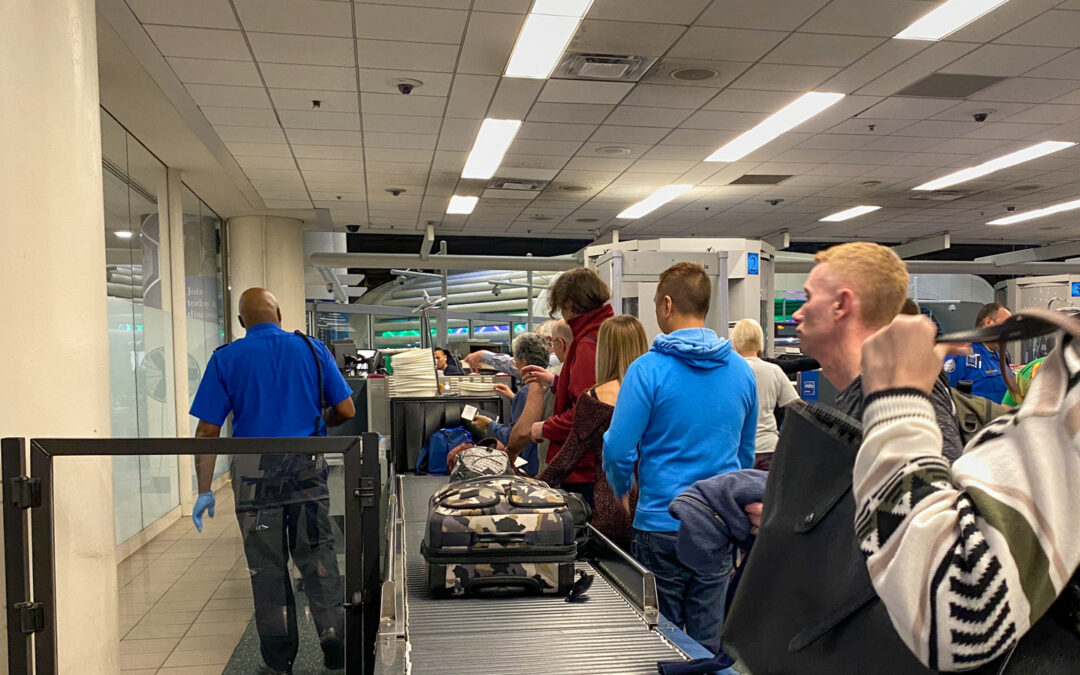
“Unofficial” carry-on bag size rules have quietly become stricter at many airports in the United States since the Transportation Security Administration (TSA) began rolling out new screening technology. The hundreds of advanced scanners have slightly smaller entry tunnels than their traditional X-ray predecessors, meaning luggage that is larger than airlines’ standard carry-on dimensions will not fit through the machine.
TSA awarded a whopping $781.2 million for the devices in 2022. The technology, which is marketed as quicker for passengers, also poses additional challenges for travelers who go through security with unprocessed film. But among the trade-offs for all travelers is that bag sizes are much more rigid than before, and if the bag doesn’t fit, the TSA won’t let it through — and it’s straight back to the check-in counter in that case.
TSA’s New CT Scanner Sizing Requirements

For years, many travelers have stretched the rules slightly when it comes to the size of their carry-on. The new CT scanners, which as of last year were at more than 250 security checkpoints across the U.S., have upended that, according to Simple Flying.
Size enforcement has depended on gate agents, airline staff, and, sometimes, luggage-sizing frames, so many have relied on soft-sided bags to push the limits of how large their carry-on can be.
U.S. airlines’ standard domestic carry-on limit is 22 inches x 14 inches x 9 inches.
But the TSA’s rollout of advanced 3D computed tomography scanners features smaller entry tunnels, which means the devices have become measuring devices themselves. The new systems have an opening of 24.5 inches wide by 16.5 inches high. Meanwhile, the older X-ray machines, such as Rapiscan Systems’ 620DV, which the company has said over 1,000 have been sold to airports, have a larger tunnel size of 25.2 inches wide by 16.9 inches high.
Here is the list of domestic airlines’ carry-on size requirements:
|
Airline |
Size (in inches) |
|
Allegiant Air |
22 x 16 x 10 |
|
Alaska Airlines |
22 x 14 x 9 |
|
American Airlines |
22 x 14 x 9 |
|
Delta Air Lines |
22 x 14 x 9 |
|
Frontier Airlines |
24 x 6 x 10 |
|
Hawaiian Airlines |
22 x 14 x 9 |
|
JetBlue Airways |
22 x 14 x 9 |
|
Southwest Airlines |
24 x 16 x 10 |
|
Sun Country Airlines |
24 x 16 x 11 |
|
United Airlines |
22 x 14 x 9 |
The smaller opening means the imaging technology and performance are superior to those of older X-ray systems. However, it also means that baggage size enforcement is now somewhat unofficially more in the hands of TSA officers before passengers reach gate agents, even though airlines make and enforce carry-on bag rules officially.
Ultimately, if a passenger’s carry-on can’t fit into one of the new CT machines, the TSA cannot screen the bag. Instead, if a bag can’t fit through the new scanners’ smaller entry holes, TSA employees may redirect travelers to the airline counters to check their bags before they continue through the checkpoint.

Even a small excess in a passenger’s bag can mean a delay, since they will no longer have the convenience of checking their bag at the gate and going directly onto the flight. In the coming years, these CT scanners are set to be rolled out at more airports across the U.S., so this carry-on bag size enforcement will only become more widespread, even if the official size rules haven’t changed on paper. TheTravel reached out to the TSA for comment on this, but did not receive an immediate response in time for publishing.
How The New TSA Advanced Scanners Work
The new scanners produce 3D images of a traveler’s bag, allowing officers to digitally rotate and zoom inside the bag. This is a step up from traditional X-ray systems, which flattened bags into a single image on their display screen. This older technology is why passengers were asked to remove certain items, such as laptops and other devices, so officers could clearly see what was inside the bags.
In that respect, the new technology will be quicker for many passengers because they will no longer have to remove devices like computers and tablets, and 3-1-1 liquids.
The 3-1-1 liquid rule states that carry-on baggage may contain only liquids, gels, and aerosols in containers of 3.4 ounces or fewer, and all containers must fit inside a single, clear, quart-sized resealable bag, with a limit of one per passenger.
The new scanners mean that some passengers will have to remove certain items they didn’t need to prior, however. Passengers traveling with unprocessed photographic film in their carry-ons must remove it to prevent damage or destruction. The new scanners’ more powerful imaging technology can damage film in a single screening.
The new screening technology is not yet in all U.S. airports, but here are several major hubs where it is currently operating:
|
John F. Kennedy International Airport (JFK) |
|
Chicago O’Hare International Airport (ORD) |
|
Los Angeles International Airport (LAX) |
|
Boston Logan International Airport (BOS) |
|
Philadelphia International Airport (PHL) |
|
Phoenix Sky Harbor International Airport (PHX) |
|
San Diego International Airport (SAN) |
|
St. Louis Lambert International Airport (STL) |
|
Washington-Dulles International Airport (IAD) |
|
Newark Liberty International Airport (EWR) |
Travelers online shared their reactions to the new screener’s dimensions. Under a post shared in Southwest Airlines’ subreddit, passengers had mixed reactions: some applauded the TSA’s ability to send passengers with oversized luggage back to the airline counter, while others expressed concern about their musical instruments.
|
“As they should. If it can’t fit in the scanner it is absolutely oversized,” one person wrote. |
|
“If your ‘carry on’ is too big to pass through the scanner, it is NOT a ‘carry on,'” another added. |
|
“This is great news,” one person wrote. |
|
“What about people that fly with instruments?” one person questioned. |
|
“This is how they plan to force all guitars and musical instruments into the cargo hold,” another added. |
Musicians can breathe a sigh of relief, however. According to TSA, instruments “require a physical inspection at the security checkpoint.”
Still, passengers need to be mindful of how they pack their carry-on luggage.
How Travelers Should Pack Their Carry-Ons For The TSA’s New CT Scanners

Travelers visiting an airport with the TSA’s new CT scanners should pack their carry-on and measure it to ensure it meets the scanner’s sizing requirements — and the airline’s. It’s important to note that size is measured not just by the bag itself, but also by its wheels and handle. To reduce the size of a carry-on, travelers can wear some of their bulkiest items, such as jackets, sweaters, and boots.
Passengers bringing unprocessed film should not attempt to keep it in their carry-on bags during screening, as it may be damaged or destroyed. They should aim to arrive at the airport between 15 and 20 minutes early to account for the time needed for a hand inspection, according to the film developing company Kubus Photo Service.
Checked baggage can also damage or destroy film due to CT scanners used for those bags, so it’s recommended to always fly with film in a carry-on bag.
Travelers are urged to separate their film from their cameras and pack it in clear quart-sized bags for quicker inspection. These bags should be placed at the top of a traveler’s carry-on bag to allow easy access. TSA officers generally take the film to a separate area during hand inspection, where each roll is visually inspected and swabbed for explosive residue before being manually cleared. The process typically takes between 3 and 10 minutes.

Ultimately, the TSA’s new CT scanners mean fewer items to take out for some passengers, and more for others, all with stricter sizing limits that travelers must be prepared for before they head to the airport. And as the new machines are only set to appear at more airports in the coming years as they replace the older X-ray scanners, the tighter bag size requirements will only become even more prevalent across the U.S.

Recent Comments