
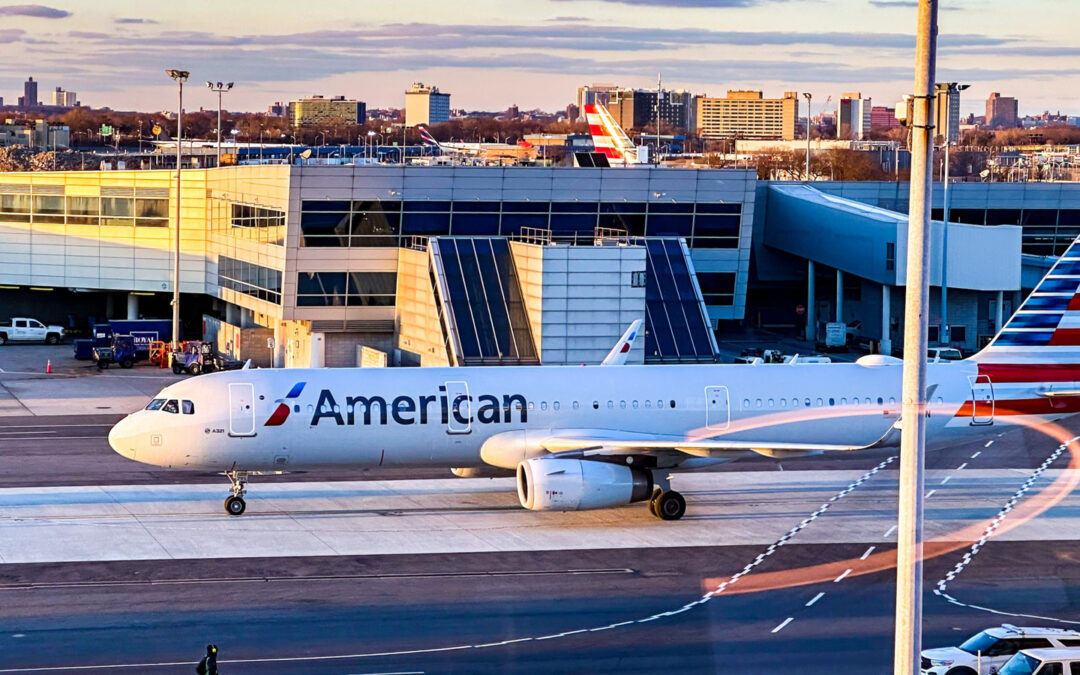
American Airlines is extending the suspension of its U.S.-Israel route through 2027, two months after its initially planned return. Nearly three years ago, the carrier canceled its flights to and from Ben Gurion International Airport (TLV) in Tel Aviv, Israel, following the immediate aftermath of the Hamas attacks. This decision reflects the ongoing dangers in the region amid the U.S.-Israel war on Iran.
Delta and United Airlines’ direct flights between the U.S. and Israel also remain suspended, though they are slated to resume within the year. American Airlines’ U-turn comes after it beat Delta and United in resuming service to Venezuela. Here’s what you should know about AA’s postponed flight resumption to Israel.
Why American Airlines Is Extending Suspension Of Flights To Israel

On Sunday (May 17), American Airlines announced that it was extending the suspension of its flights between John F. Kennedy International Airport (JFK) in New York and Ben Gurion Airport (TLV) in Tel Aviv, Israel, until Jan. 6, 2027. The airline was set to relaunch the service in March 2026. However, ongoing security risks and regional conflict have forced AA to adjust its schedule.
While the Middle East airspace has largely reopened to commercial traffic, Israel is still operating cautiously, with significantly reduced capacity and heavily monitored activity. Israel’s national carrier, El Al Airlines, continues to operate non-stop routes between Tel Aviv (TLV) and several major airports, such as New York (JFK/EWR), Los Angeles (LAX), Miami (MIA), and Boston (BOS).
American Airlines is also delaying the resumption of its flights between Philadelphia International Airport (PHL) and Hamad International Airport (DOH) in Doha, Qatar, to Jan. 5, 2027. This route was suspended in March due to safety concerns following U.S.-Israeli strikes on Iran. The State Department continues to urge Americans to “reconsider travel” to Qatar due to the risk of armed conflict.
In an emailed statement to JNS, American Airlines said it “will proactively reach out to impacted customers of this schedule adjustment, offering options in line with our customer-friendly schedule change policy.”
In October 2023, American Airlines, Delta, and United pulled their operations from Israel after Hamas’ surprise attacks on the country. At the time, the U.S. carriers said that their customers’ safety was their priority, and that they would continue to monitor the security conditions in the region and then adjust their schedules accordingly.
United And Delta Will Resume Flights To Israel In Late 2026

American Airlines’ competitors, United and Delta, are scheduled to resume flights between the U.S. and Israel within the year. Early in April, United extended its suspended nonstop flight from New York to Tel Aviv through at least Sept. 7, 2026. It was initially put on hold through June 14.
On April 29, Delta Air Lines announced that its Hartsfield-Jackson Atlanta International (ATL) to Tel Aviv (TLV) flights will remain paused through Nov. 30. Its New York (JFK)-Tel Aviv route is also on track to resume on Sept. 6. However, the rollout of its Boston (BOS) to TLV service is still delayed until further notice.

Tel Aviv is a historically lucrative hub for U.S. carriers, especially for business travel. Keeping these tentative schedules enables airlines to preserve their airport slots and make sure they quickly recapture the market once geopolitical tensions stabilize. European carriers have also announced plans to revive flight services to Israel following eased warnings from the European Union Aviation Safety Agency (EASA).
Wizz Air, a Hungarian ultra-low-cost airline, is resuming its operations to and from Ben Gurion Airport (TLV) on May 28, while Germany’s Lufthansa group of carriers is also eyeing a phased launch of flights to and from Israel starting in June. Lufthansa’s group includes Lufthansa, SWISS, Austrian Airlines, Brussels Airlines, and Eurowings.
Is It Safe To Travel To Israel Now?
The U.S. Department of State maintains a Level 3: “Reconsider Travel” advisory for Israel due to terrorism and civil unrest. Non-emergency U.S. government employees have also been authorized to depart Israel since February 27, a day before Operation Epic Fury broke out.
Additionally, the advisory has a “Do Not Travel” warning for Gaza, Northern Israel (within 2.5 miles of the Lebanese and Syrian borders), and the Egyptian border (within 1.5 miles, except for the currently open Taba crossing). The State Department emphasizes terrorist threats, with terrorist groups, lone-actor terrorists, and other violent extremists plotting potential attacks in Israel, the West Bank, and Gaza.
“Terrorists and violent extremists may attack with little or no warning, targeting tourist locations, transportation hubs, markets/shopping malls, and local government facilities,” reads the U.S. travel advisory for Israel. “The security environment is complex and can change quickly, and violence can occur in Israel, the West Bank, and Gaza without warning.”
Lastly, the current situation in the region can cause airlines to cancel and/or reduce flights to and from Israel with little to no notice. Thousands of U.S. citizens were stranded in the Middle East for weeks following the U.S.-Israeli attacks on Iran in late February. At the time, Americans reported that the U.S. embassies in affected countries were “useless” in assisting them with repatriation flights.
This controversial response drew flak from U.S. lawmakers as well. So keep in mind that the State Department advises travelers to prepare a contingency plan for emergency evacuations that does not rely on the U.S. government. Those planning to go to Gaza are even advised to draft a will and leave DNA samples with their medical providers in case their family and loved ones need to access them.

Recent Comments